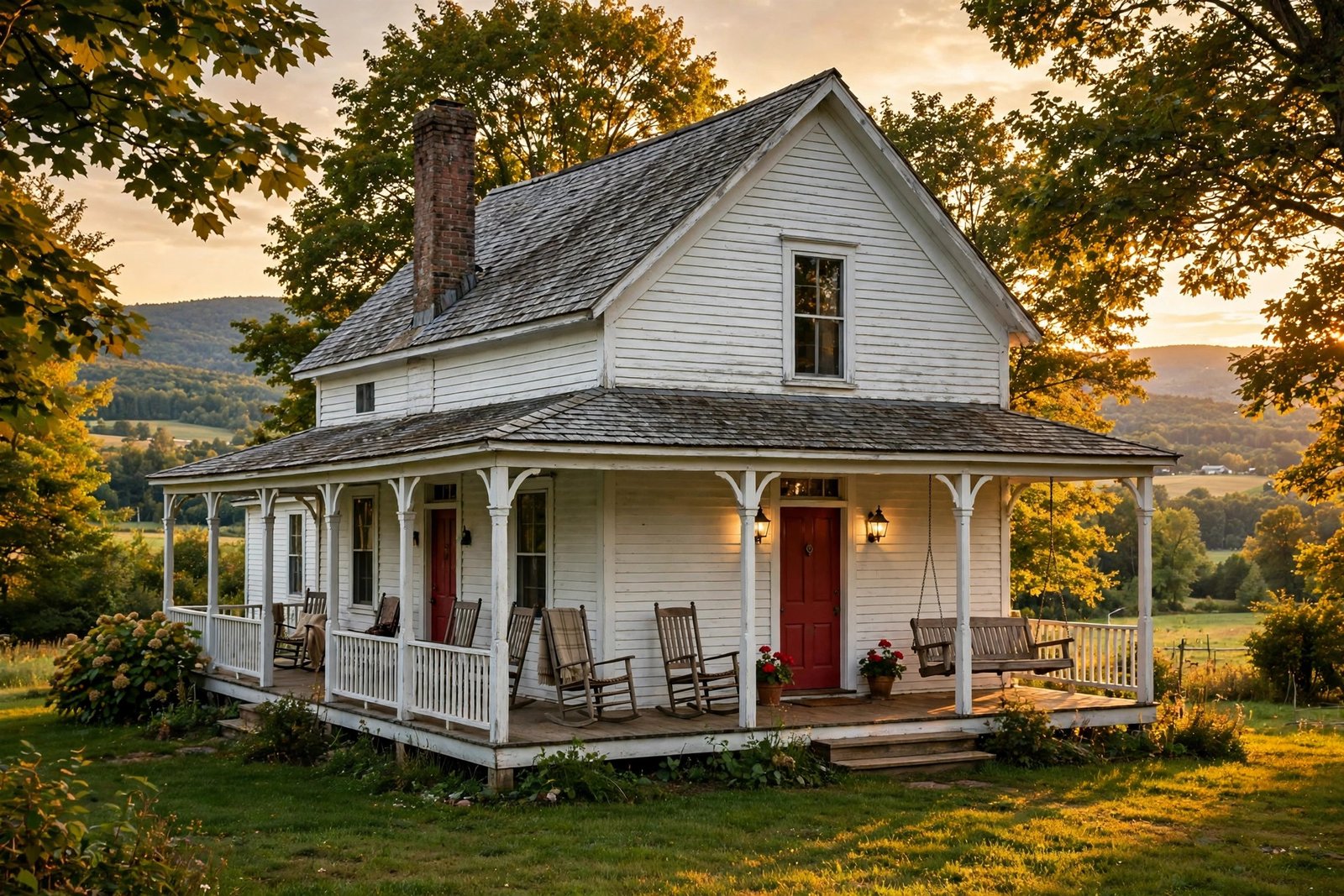
Few houses have as much curb appeal as an old farmhouse. Wide porches, tall windows, a steep gabled roof and a yard full of history make people slow down when they drive past. But an old farmhouse exterior needs more care than a newer home: wood siding weathers, paint peels, porches sag, and a roof that has sheltered five generations will eventually need attention. The good news is that the best old farmhouse exterior ideas do not require tearing the house down to the studs. With the right paint, a thoughtful porch, period-correct details and a little landscaping, you can bring a tired farmhouse back to life while keeping every bit of its character.
This guide covers paint colours, porches, doors, windows, roofing, landscaping, barns and outbuildings, outdoor lighting, budget curb appeal, and how to preserve historic character.
Before you start, know what you are working with. A farmhouse built before 1940 is usually a wood-frame house with clapboard or board-and-batten siding, a gabled roof, double-hung windows and a front porch. The same principles apply to brick or stone farmhouses: respect the original proportions, repair before you replace, and choose materials that age the way the house already has. If you are also budgeting a full renovation, read our guide on how much it costs to renovate an old house so your exterior plans fit the bigger picture.
What Makes an Old Farmhouse Exterior Special
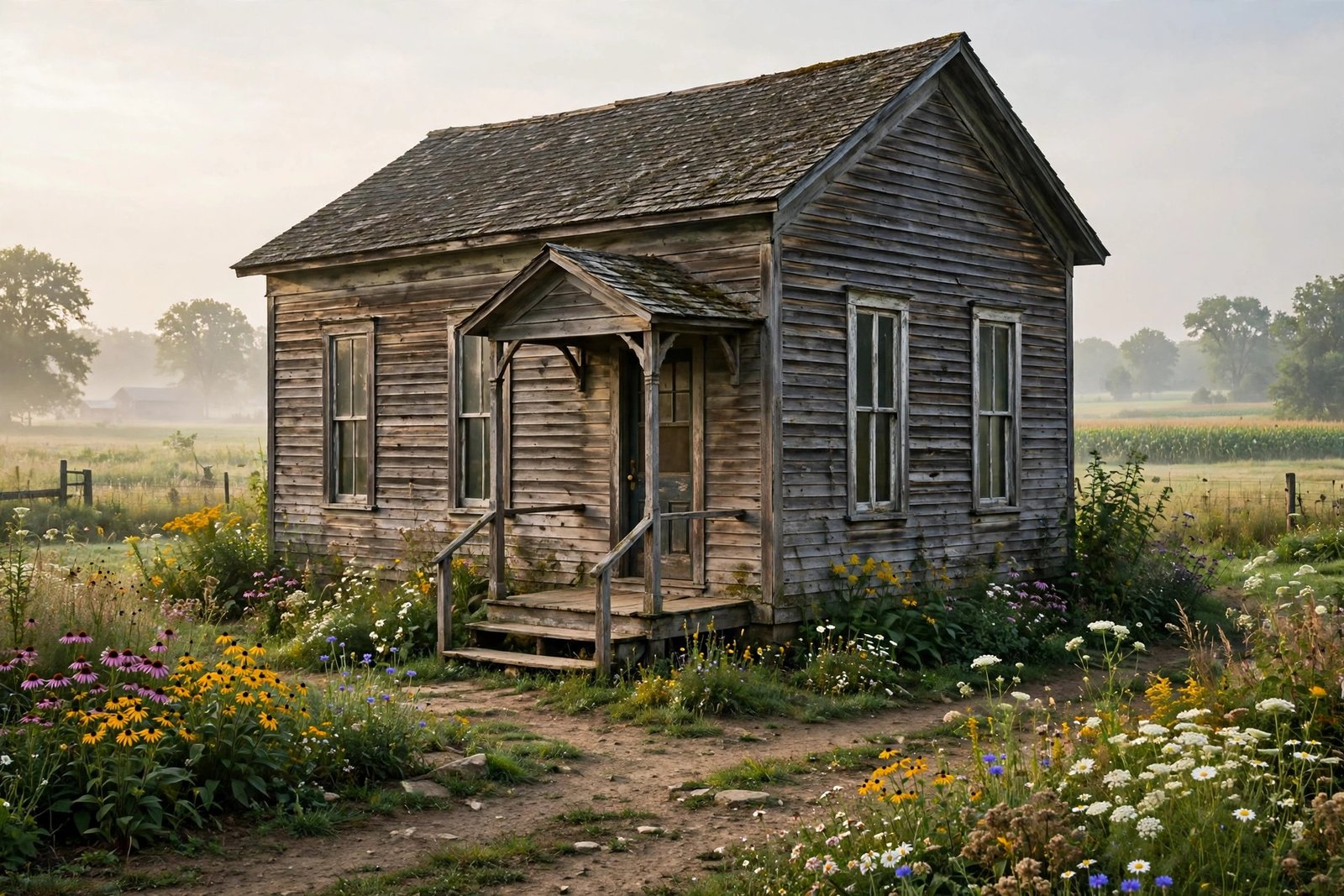
An old farmhouse exterior is special because it was designed for a working life, not for a photograph. The wide porch was where people shelled peas and watched the weather, the tall windows were sized to catch breezes before air conditioning, and the steep roof shed snow and rain. Every detail had a job, and that honesty is what makes farmhouses so appealing today. Unlike the ornate Victorians of the same era — see our guide to the 15 most beautiful old Victorian houses in America — farmhouses win with simplicity.
The most charming farmhouse exteriors share three traits. First, they are simple — a clean gable, a straight porch line and honest materials do the work, with no need for gingerbread trim. Second, they are connected to the land, sitting in the yard with a path, a fence and plantings that feel grown rather than installed. Third, they show their age gracefully. Weathered wood, a slightly uneven porch floor and a hand-forged hinge are not flaws; they are the story of the house.
Farmhouse Exterior Paint Colours
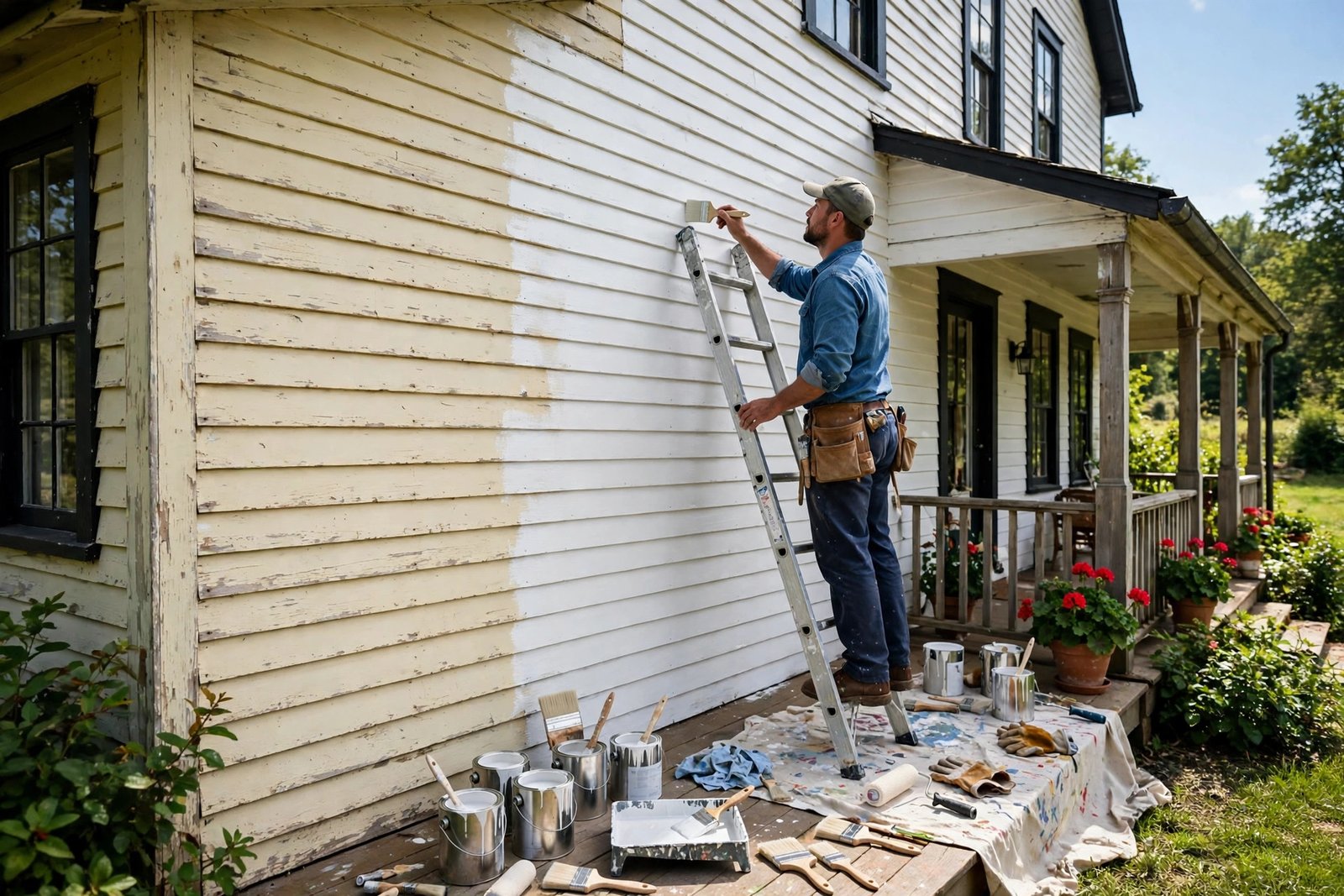
Paint is the fastest way to transform an old farmhouse exterior, and the easiest place to make an expensive mistake. In 2026, the most successful exteriors use a simple three-part scheme: a main body colour, a trim colour, and one accent for the front door, shutters or porch details. Three colours are enough — more looks busy.
Always test paint on the house first: paint large swatches on the sunniest and shadiest walls and check them morning, noon and dusk. Budget $60–$150 for samples — cheap insurance on a $5,000–$15,000 paint job.
Classic White and Cream Farmhouses
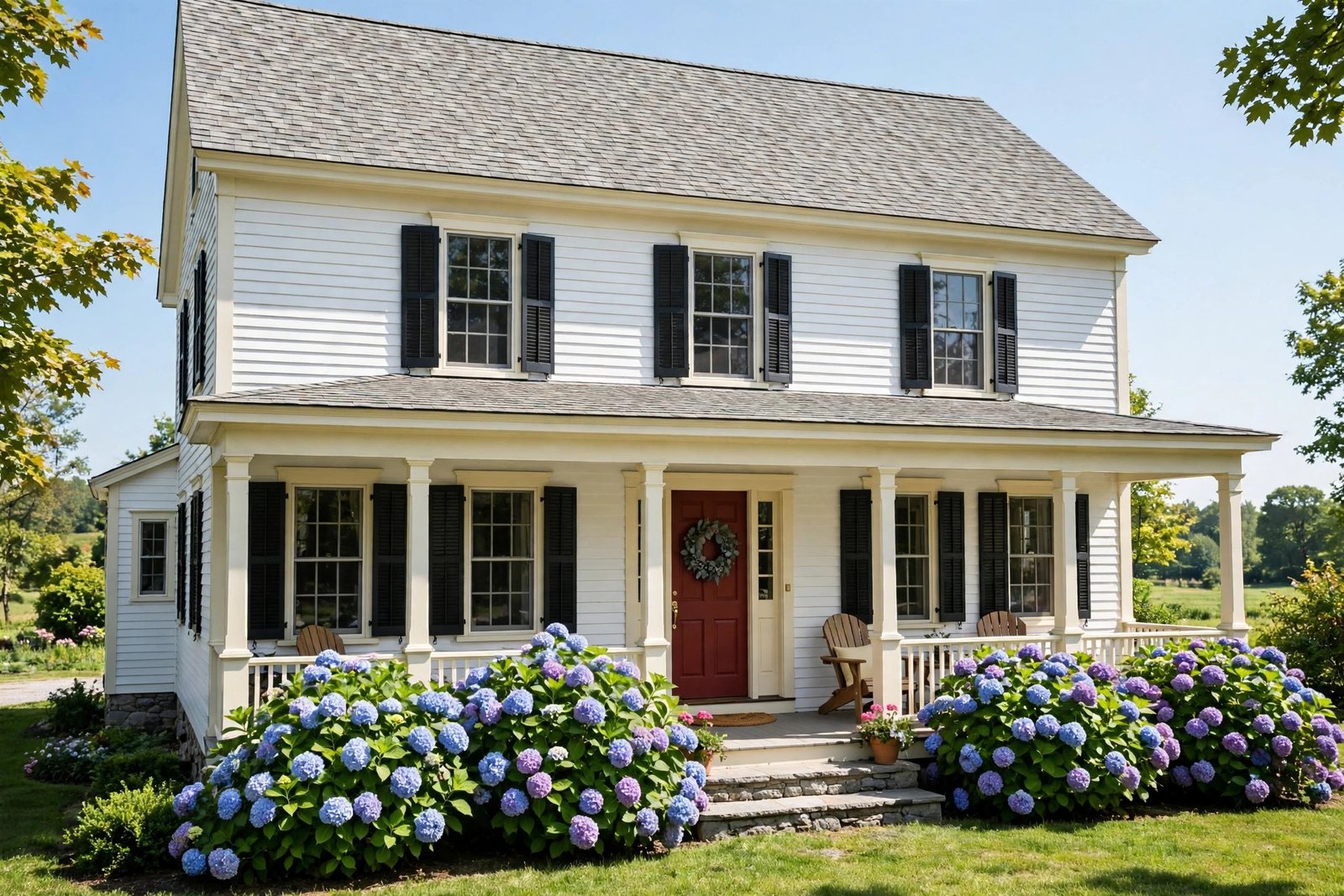
White is the classic farmhouse colour for a reason: with black or deep green shutters, a dark front door and a grey or black roof, it reads as timeless. Warm whites such as Benjamin Moore White Dove, Sherwin-Williams Alabaster or Behr Swiss Coffee beat stark blue-whites, which can look cold on old wood. Cream suits stone and brick too.
If your farmhouse already has white trim, try a soft cream body with bright white trim for gentle contrast and depth. In heavy shade, a warmer white keeps it from looking grey. White shows dirt and mildew fastest, so wash the siding every year or two.
Bold and Moody Farmhouse Colours
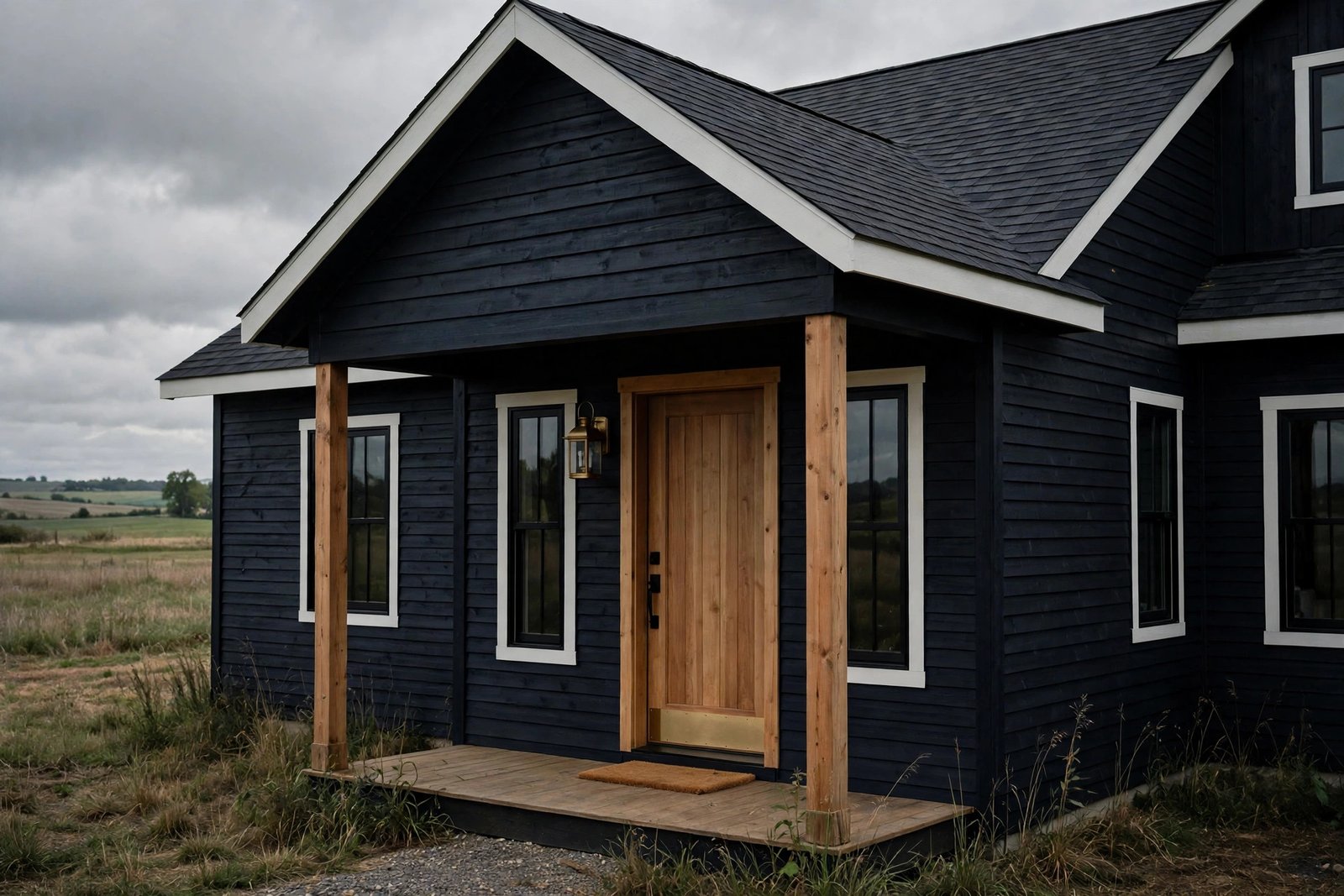
Not every farmhouse has to be white. In 2026, deep, moody colours are a strong trend, and they suit historic houses surprisingly well. Charcoal, deep navy, forest green and even black look grounded and dramatic with warm porch wood, natural stone, and brass or black hardware.
Dark colours absorb heat, so they suit northern climates better than the deep South and show fading sooner — use high-quality paint and expect to repaint every 7–10 years. A dark accent, such as a navy door, works well against a white or cream house.
Porches: The Heart of the Farmhouse Exterior
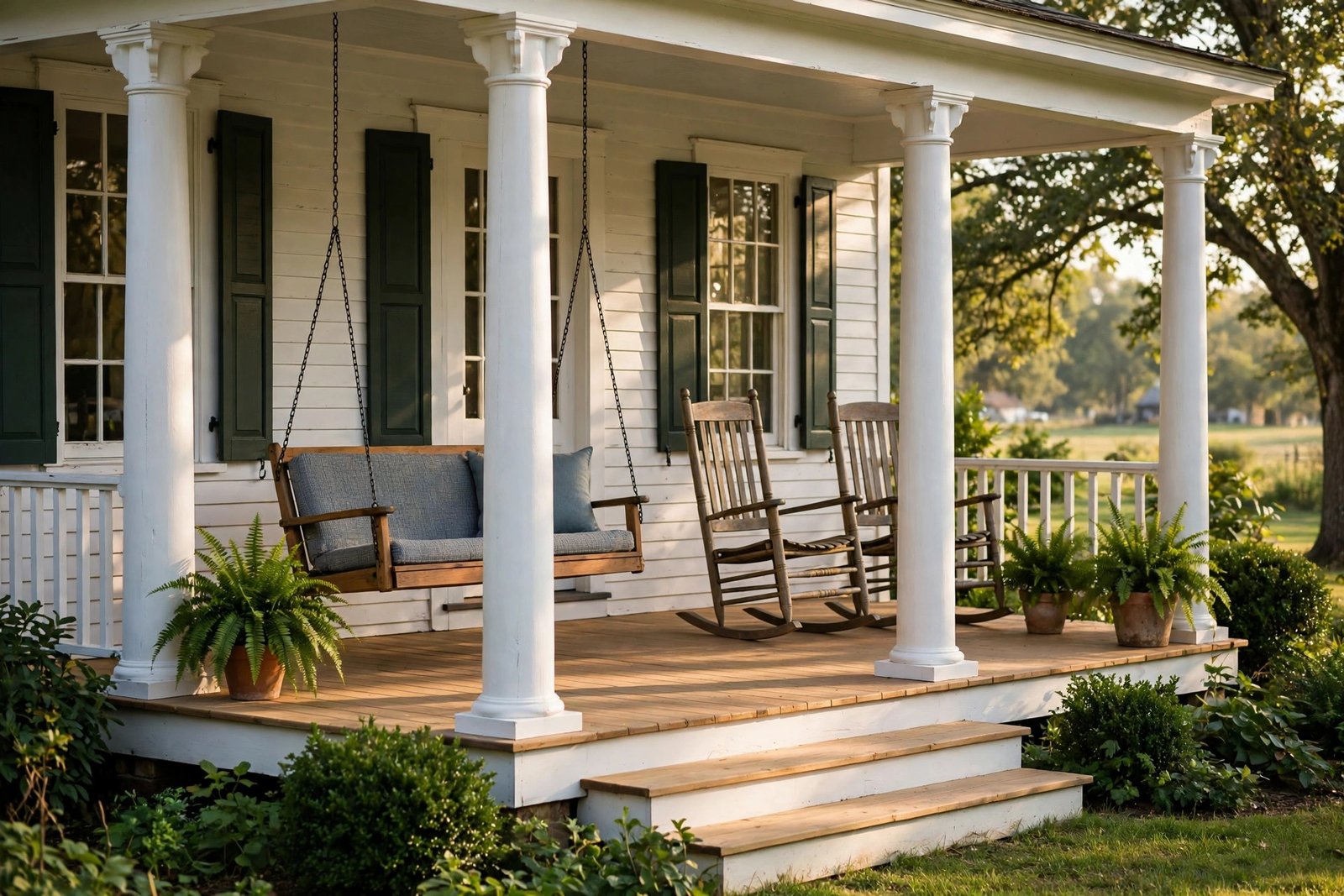
If the farmhouse has a heart, it is the porch — an outdoor room, shade structure, mudroom and social space all at once. Restoring it is one of the best, most visible investments in an old farmhouse exterior: a sagging, peeling porch drags the house down, while a solid, freshly painted one makes the property feel cared for.
Start with the structure, not the paint. Porches fail from the bottom up: posts rot where they meet the deck, boards cup and hold water, and piers settle unevenly. A full restoration costs $5,000–$20,000, but repairing a few posts and boards can cost as little as $1,000–$3,000. Never paint over rot.
Wraparound Porch Ideas
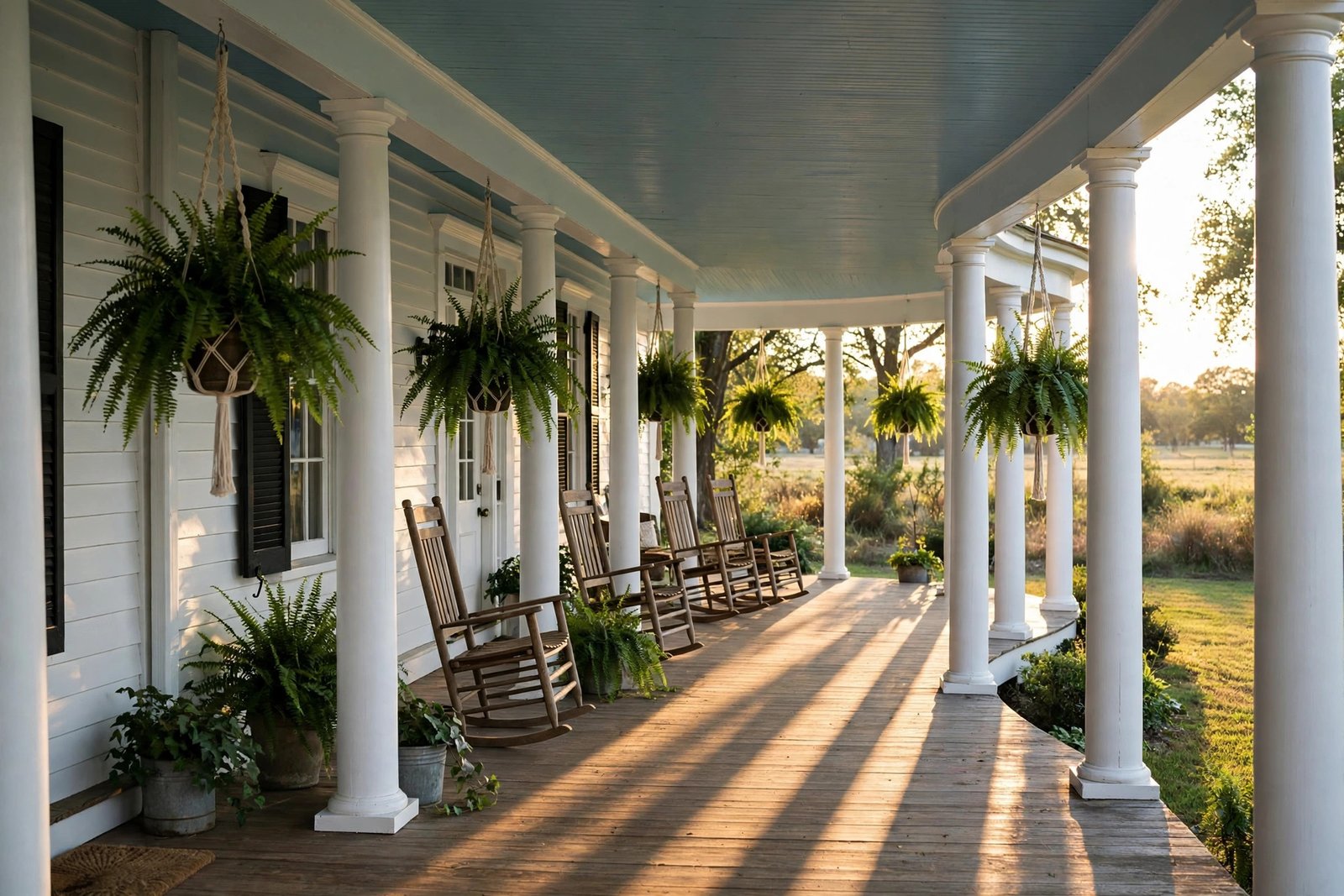
A wraparound porch is the dream feature of many farmhouse owners — if yours has one, protect it. The key is rhythm: evenly spaced posts, a consistent railing, and a ceiling painted soft blue or pale green. The old Southern tradition of haint blue ceilings was partly superstition and partly practical, keeping the ceiling feeling like sky and, old-timers claim, discouraging insects.
If your farmhouse never had a wraparound porch, think carefully before adding one: wrapping the whole house can darken interior rooms and hide original siding. A generous front porch plus a smaller side porch is often better, with a simple roofline in proportion to the house.
Porch Furniture and Decor
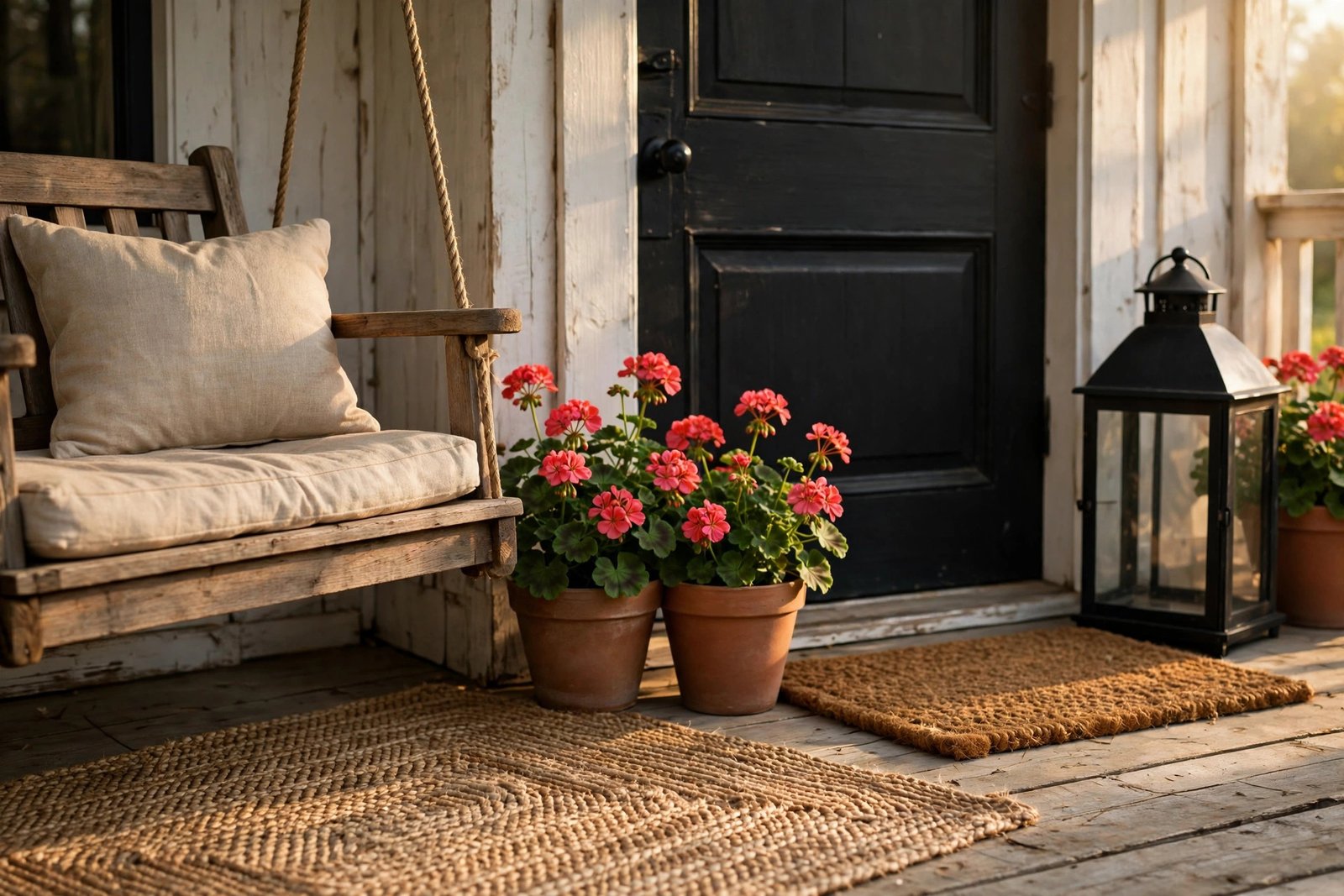
Porch furniture should look like it has always been there. A wooden porch swing hung from the ceiling joists, two rocking chairs, a small side table and a woven rug are enough — a crowded porch looks like a storage area. Choose furniture that handles weather: cedar, teak, wrought iron or painted hardwood. Cushions in outdoor fabric add comfort, and potted ferns, geraniums or herbs in terracotta pots soften the hard edges of the porch.
Farmhouse Doors and Windows
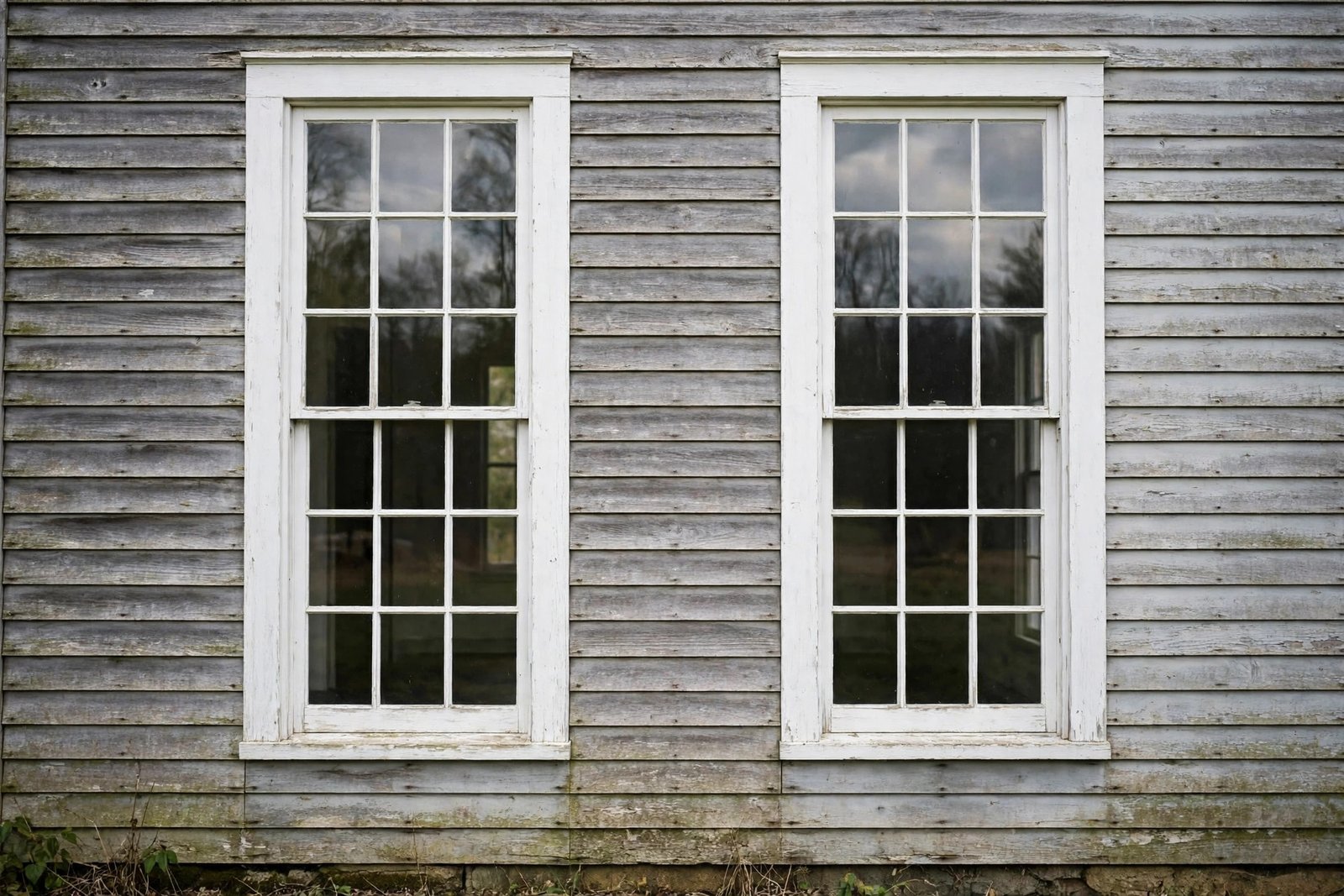
Doors and windows are the face of a farmhouse, and they are where historic character is most easily lost. Replacing original wood windows with vinyl is one of the most common — and most regretted — exterior changes on old houses. Original double-hung windows were built from old-growth wood, they can be repaired, and with storm windows and weatherstripping they perform nearly as well as replacements. A window restoration costs $800–$1,500 per window and will outlast a vinyl replacement by decades.
Front Door Ideas
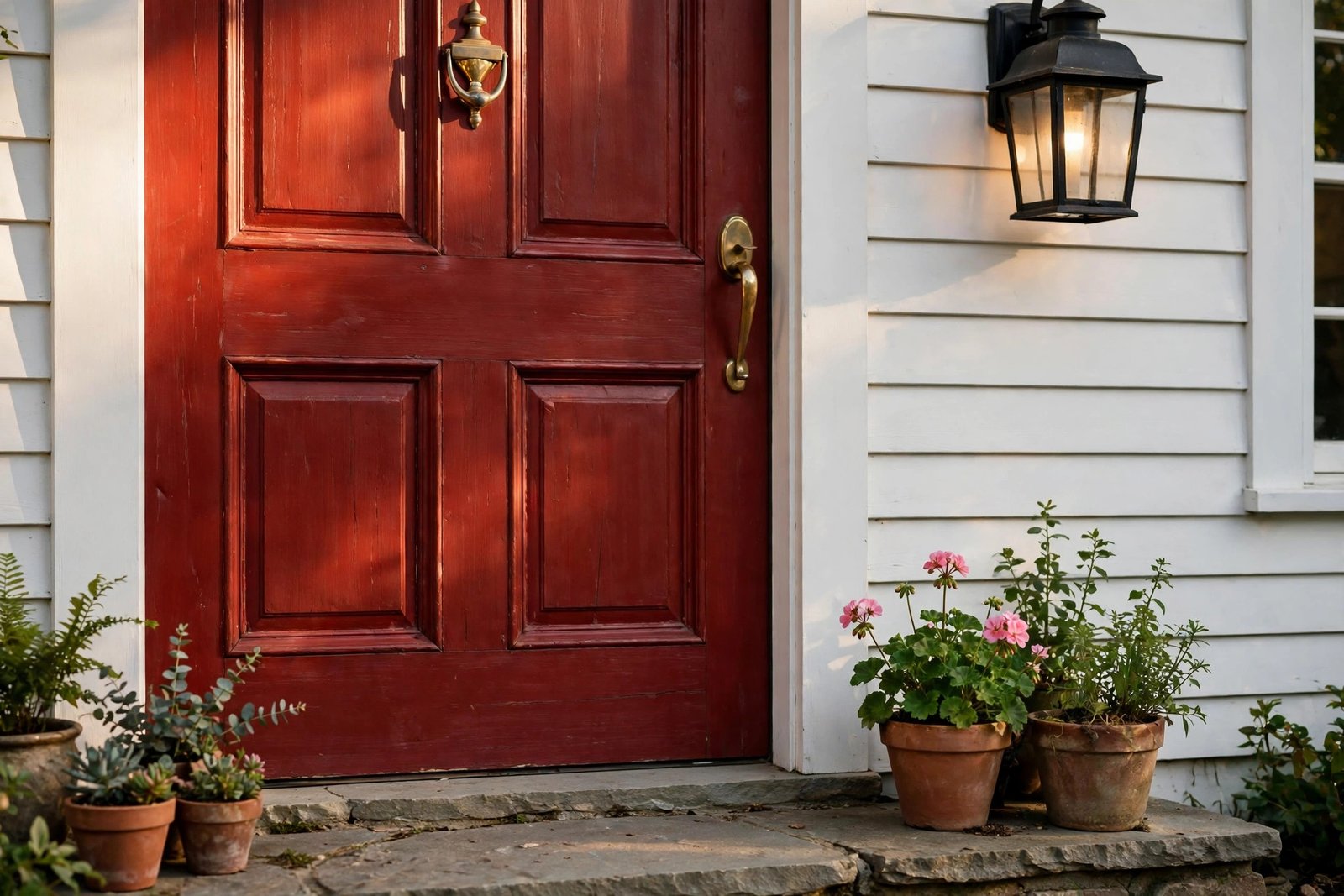
The front door is the one place on a farmhouse exterior where a bold choice pays off. A wood door with panels, a Dutch door, or a door with a small window at the top all feel solid and welcoming. Paint it a colour that contrasts with the body of the house — deep red, navy, forest green, black or even a cheerful yellow on a white farmhouse. A new front door costs $1,500–$5,000 installed, but painting an existing solid door costs under $100 and changes the whole look of the house in an afternoon.
Hardware matters: a cast-iron or brass handle, a sturdy knocker and a house number in a period-style font add up to a big impression. Avoid modern chrome hardware on a historic farmhouse, and choose a full-view storm door or simple wood screen door rather than a heavy aluminium one.
Windows and Shutters
Farmhouse windows are tall and narrow, usually double-hung with six-over-six or two-over-two panes. Keep the original proportions when you repair or replace them — a short, wide window looks wrong because the house was designed around vertical lines. If you need more light, add a window that matches the existing ones rather than enlarging an opening, which is a structural job costing $2,000–$5,000 per opening.
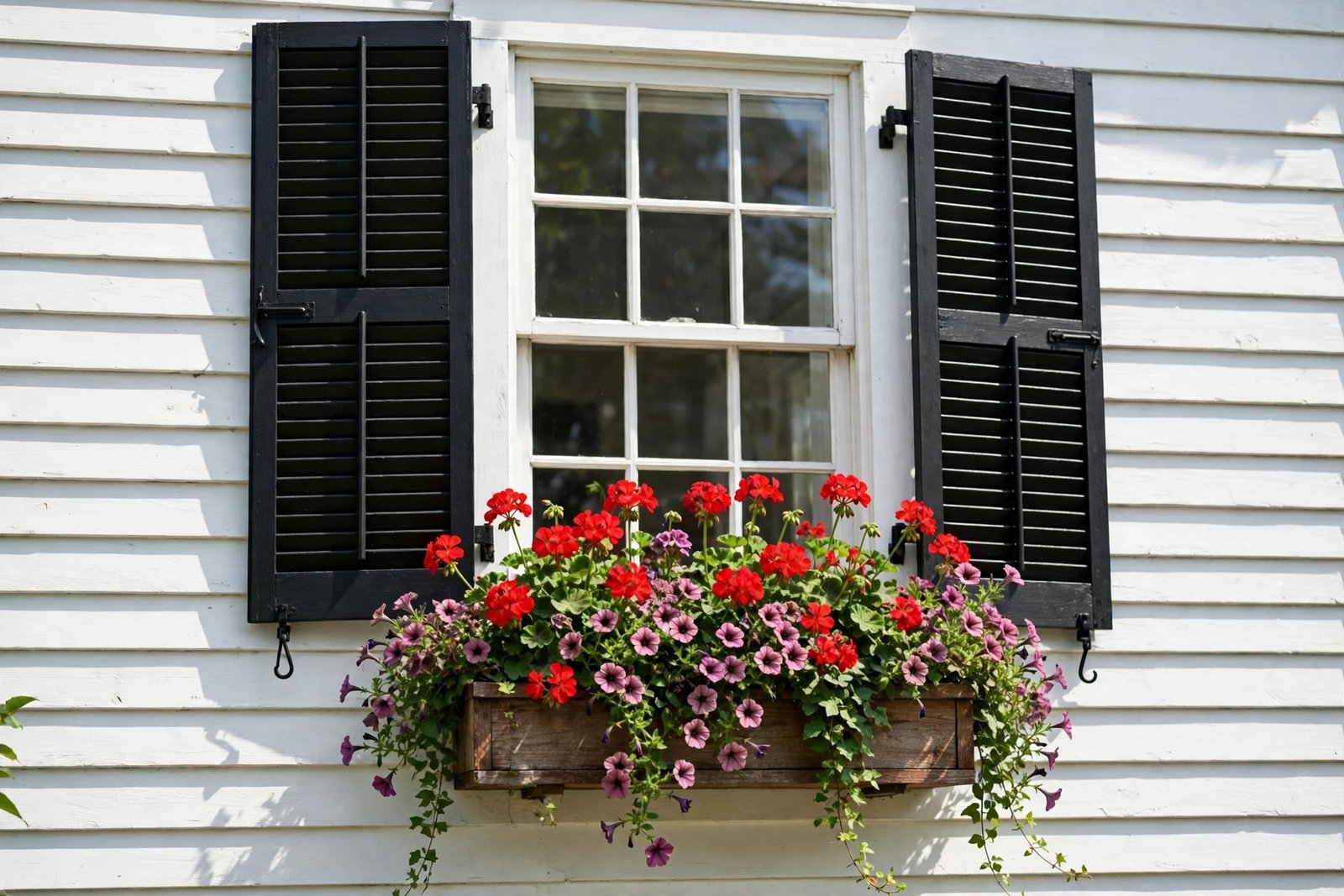
Shutters should look like they could actually close over the window: each shutter half the width of the opening, mounted on hinges, with real louvres or boards. Shutters that are too narrow and screwed flat to the wall are a clear sign of a cheap renovation. Real working shutters cost $200–$600 per pair. Window boxes are another farmhouse classic: a simple wooden box with trailing petunias or herbs under a front window softens the whole facade for very little money.
Roofing for Old Farmhouses
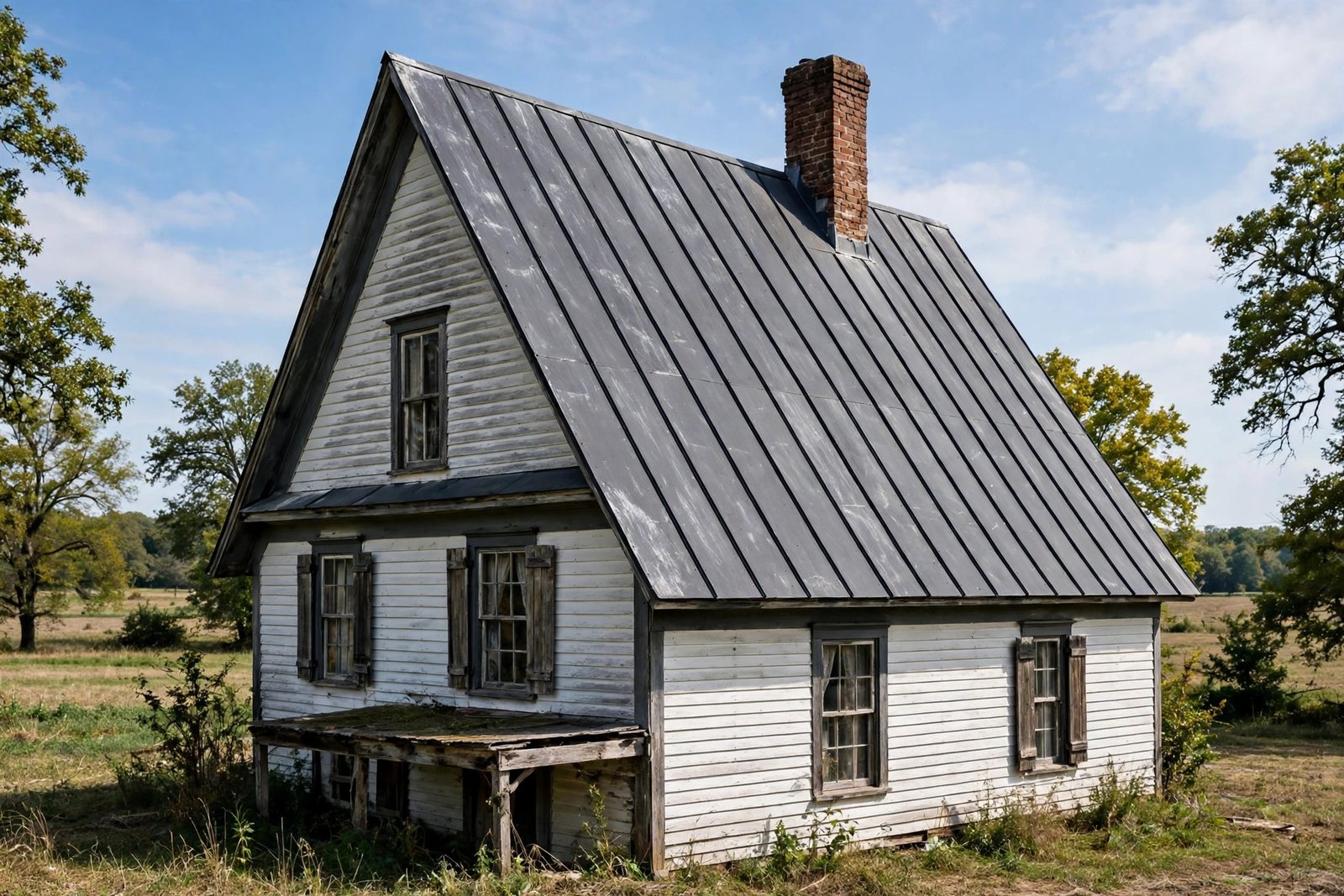
The roof is the largest single surface on a farmhouse exterior. Most old farmhouses were built with wood shingles, slate or standing-seam metal roofs; many have since been re-roofed in asphalt shingles. A standing-seam metal roof lasts 50–70 years, sheds snow, suits the rural character of the house, and costs $15,000–$30,000. Asphalt shingles cost $12,000–$30,000 and last 20–30 years. Real slate costs $30,000–$60,000 but can last a century.
Colour matters on the roof too. A dark grey, charcoal or black roof works with almost any farmhouse body colour and makes the house look grounded. A red or green metal roof can be beautiful on a white farmhouse, but test it against your paint colours first.
Landscaping and Gardens
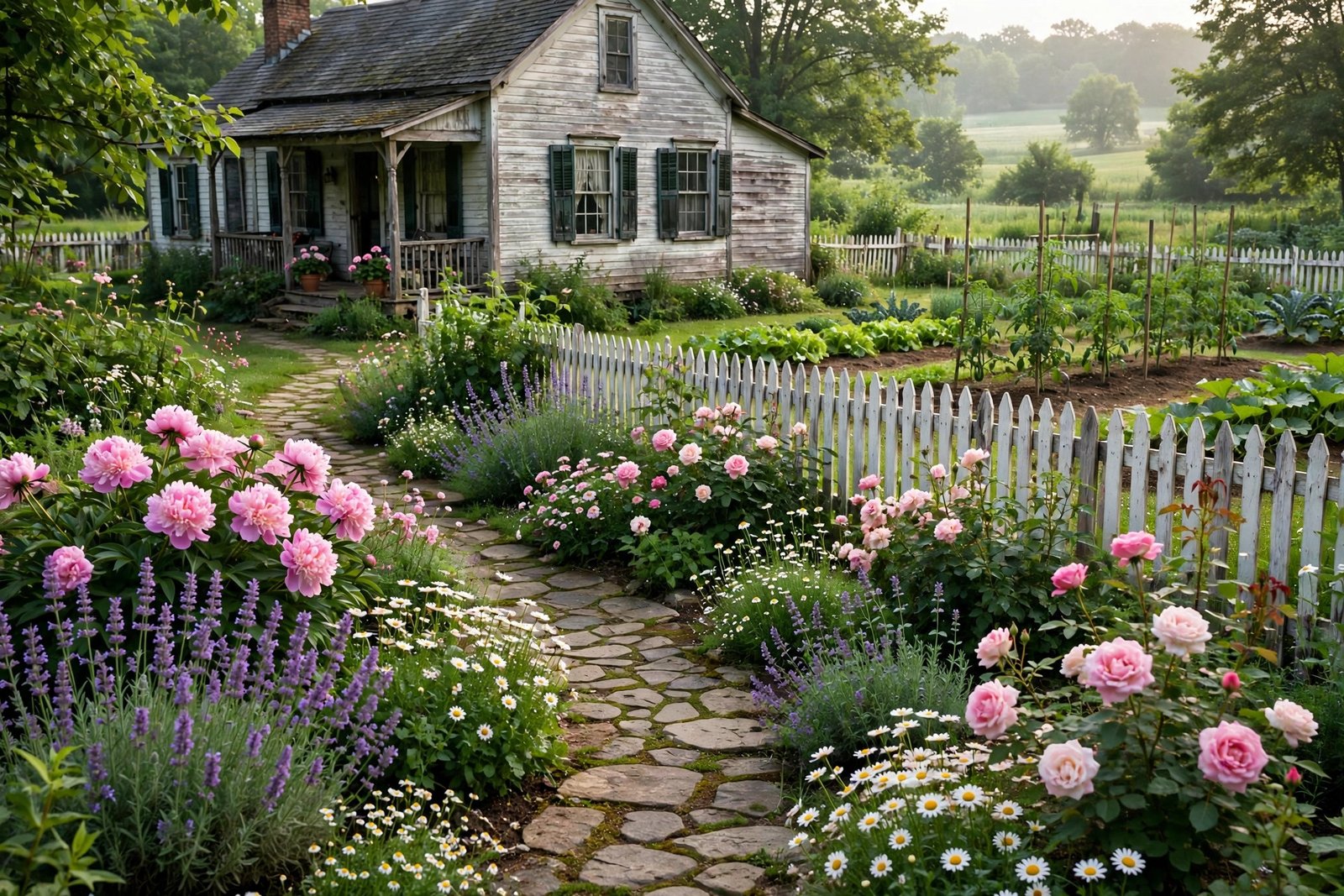
A farmhouse without landscaping looks unfinished, but it should never look formal. The best yards feel grown, not designed: native plants, a vegetable or herb garden, fruit trees, and a slightly uneven lawn. Start with the bones — the path to the front door, a fence or hedge framing the yard, and one or two trees for scale. Keep trees at least 20 feet from the foundation.
Plant for the seasons: spring bulbs, summer flowers, autumn colour from maples or grasses, and evergreen shrubs for winter structure. A cottage garden of roses, lavender, peonies, daisies and herbs is the classic farmhouse style — keep beds edged but not fussy.
Barns and Outbuildings
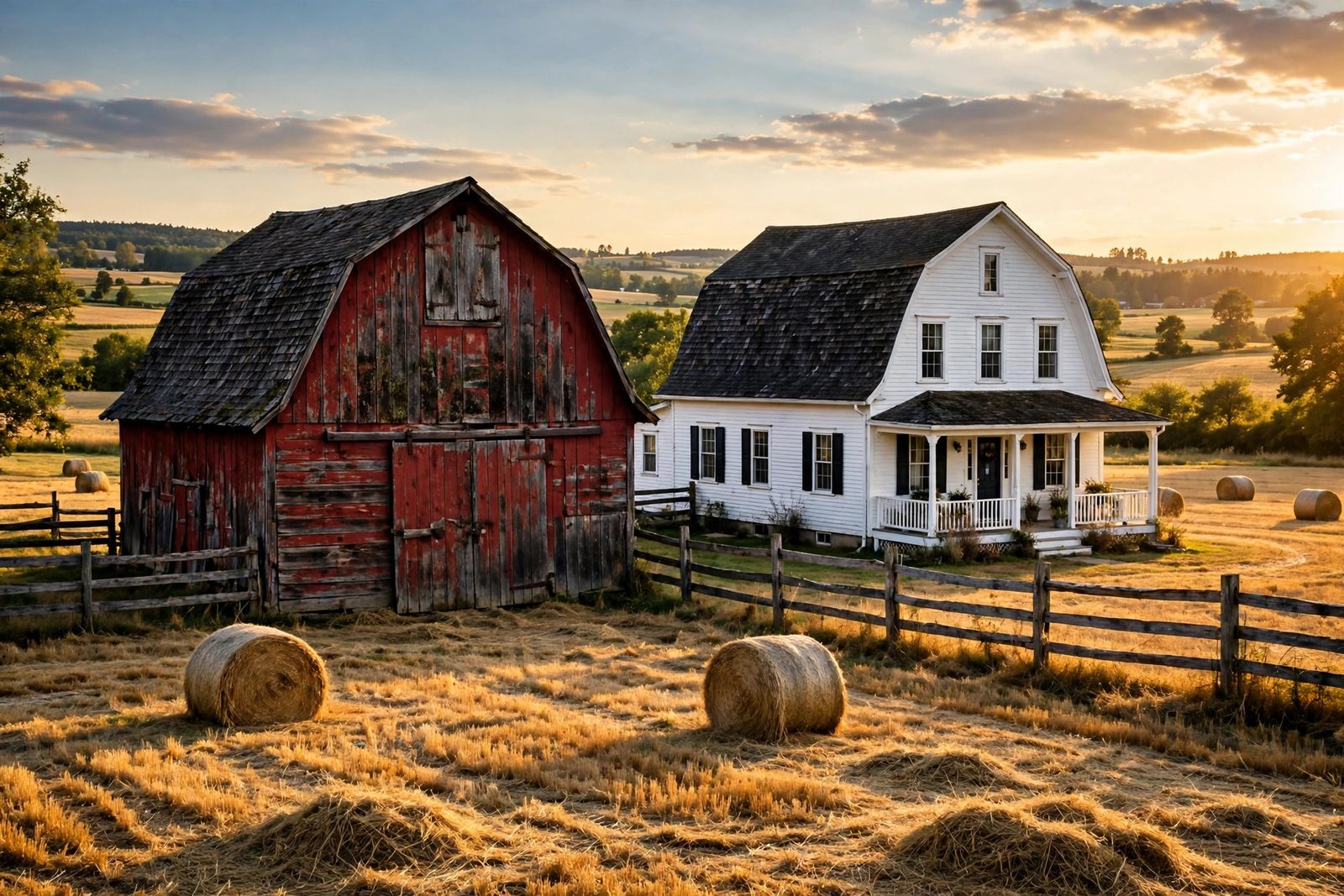
A farmhouse is rarely alone. Barns, sheds, chicken coops, smokehouses and garages are part of the property’s character, and they deserve the same care as the house. A weathered red barn is one of the most photographed sights in rural America, and keeping it standing is worth real effort. Start by stabilising the structure: a barn fails when its foundation rots or its roof leaks, so repair the roof and the sills first. Painting a barn with traditional red barn paint costs $1,000–$3,000 for a typical barn and protects the wood for years.
Outbuildings should echo the house, not compete with it. Paint them the same colour as the house or a complementary barn red, use the same trim colour, and keep rooflines simple. Old outbuildings make wonderful garden sheds, studios and workshops, and converting one is usually far cheaper than building new — a basic barn conversion starts around $20,000–$50,000.
Outdoor Lighting for Farmhouses
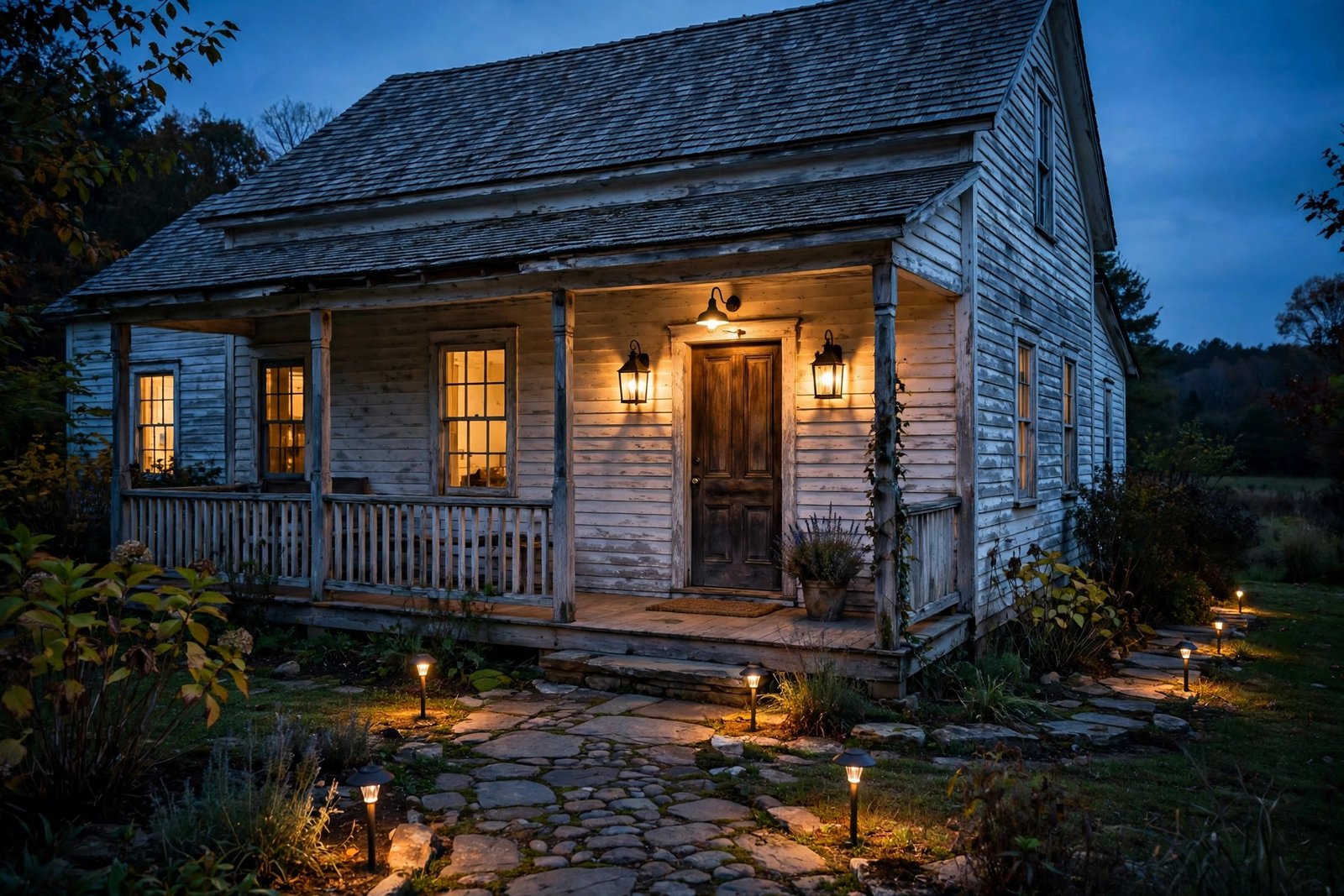
Good outdoor lighting makes a farmhouse look magical after dark, and it is also a matter of safety. A farmhouse yard without light is a yard full of tripping hazards. The best farmhouse lighting is warm, low and layered: a lantern by the front door, a light over the porch, path lights along the walkway, and a soft uplight on a tree or the barn. Warm white light (2700K) suits old wood and stone far better than cool white or blue-white light, which makes a farmhouse look like a car park.
Choose fixtures that suit the period of the house: black or oil-rubbed bronze lanterns, gooseneck barn lights over the doors, and copper path lights that develop a patina. Solar path lights are cheap and easy, but often too dim and too blue — low-voltage wired lighting costs more upfront ($500–$2,000 for a typical yard) but looks far better and lasts longer. Keep the lighting subtle: a farmhouse should glow, not blaze.
Curb Appeal on a Budget
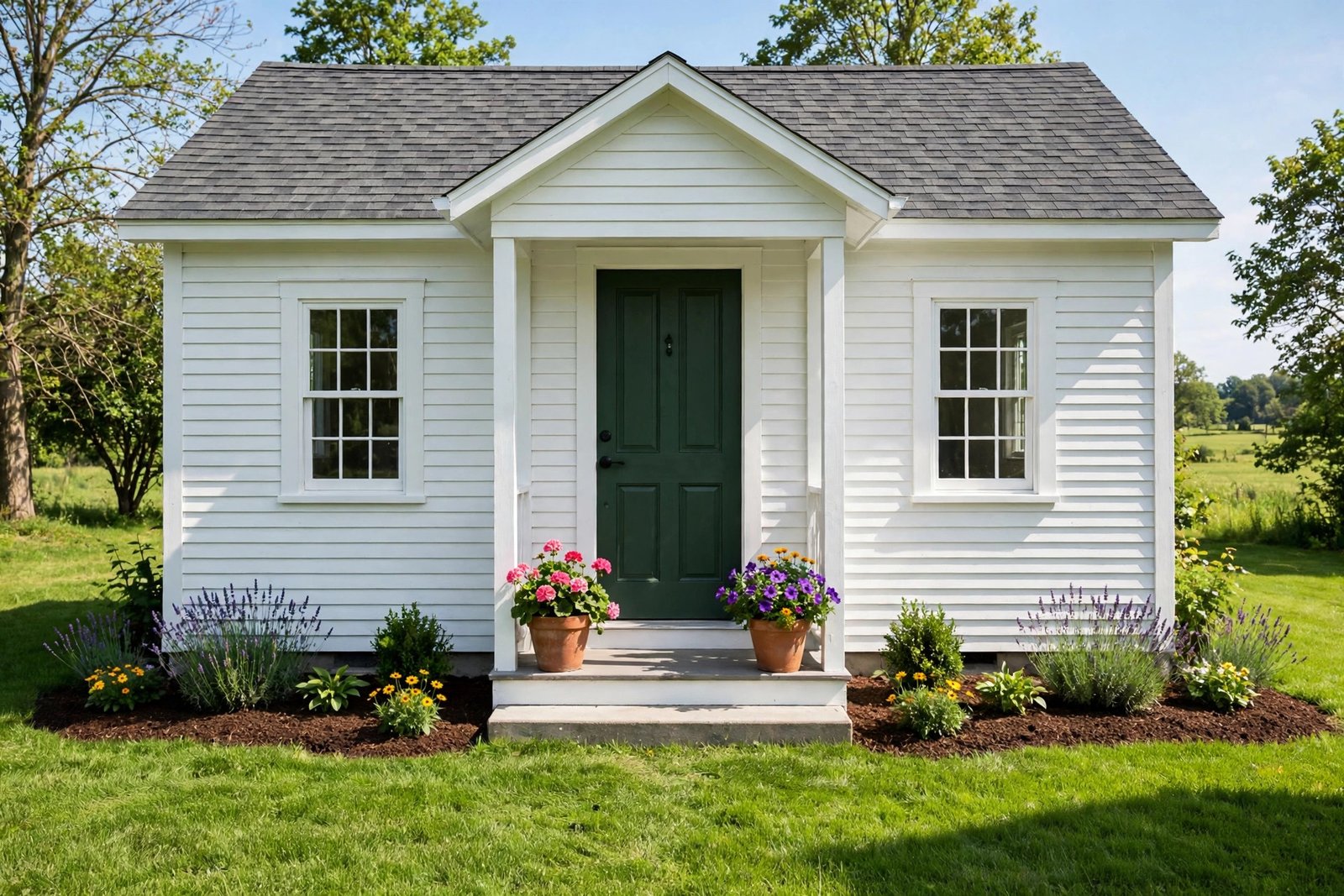
You do not need $50,000 for real curb appeal. Start with a deep clean: pressure-wash the siding, porch and walkway, clean the gutters, and wash the windows. A dirty house looks neglected even when it is structurally sound.
Next, paint the front door, replace the house numbers, and add a new doormat and potted plants — under $200 for a completely new first impression. Then mow, edge the lawn, mulch the beds, and trim shrubs blocking the windows. For under $500 total, you can transform a farmhouse exterior from tired to welcoming.
If you have $1,000–$3,000, the next best spends are porch repairs and a fresh coat of paint on the trim and shutters — trim paint is where a house shows its age first. With $5,000–$10,000, a new porch floor, a repaired roof section, or a professionally painted front facade delivers the biggest return. Spend on the things people see first: the door, the porch, the path, and the front of the house. The back can wait.
Preserving Historic Character
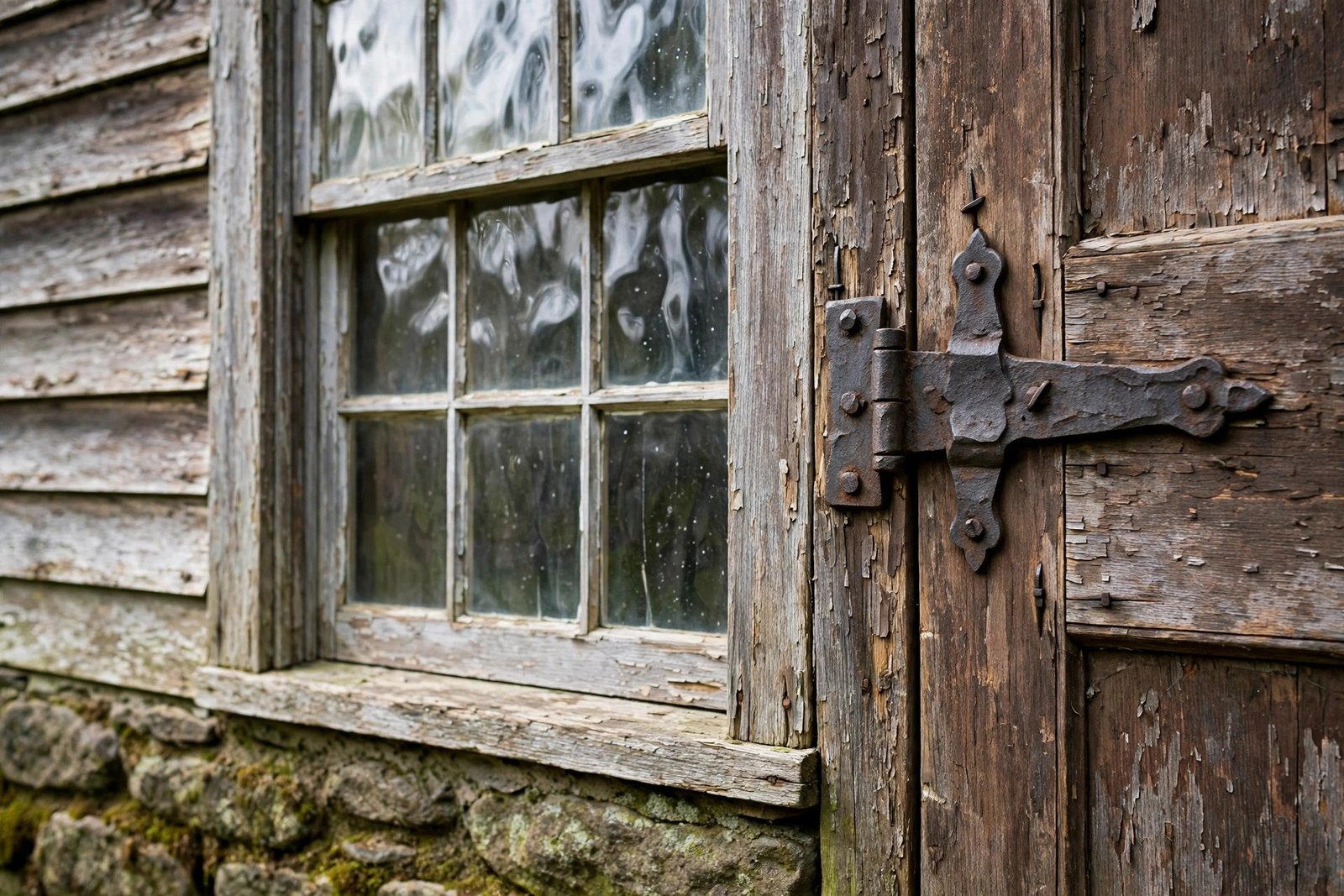
The hardest part of renovating an old farmhouse exterior is knowing what to keep. Historic character is specific things: the original siding profile, the window proportions, the porch posts, the roof pitch, the chimney, the foundation stone. Every time one of these is replaced with a modern substitute, the house loses a little of its identity. Repair is almost always better than replacement for historic fabric. A rotted clapboard can be replaced with a matching board for a few dollars; a whole wall of vinyl siding erases the house’s texture forever.
If your farmhouse is in a historic district or on a historic register, there may be rules about what you can change. Check with your local historic preservation office before you start exterior work — approval is usually free or cheap, but unapproved work can lead to fines and a forced reversal. Even without formal rules, the preservation principle is simple: keep what is original, repair what is damaged, and make new work look like it belongs.
Before-and-After Farmhouse Exterior Ideas
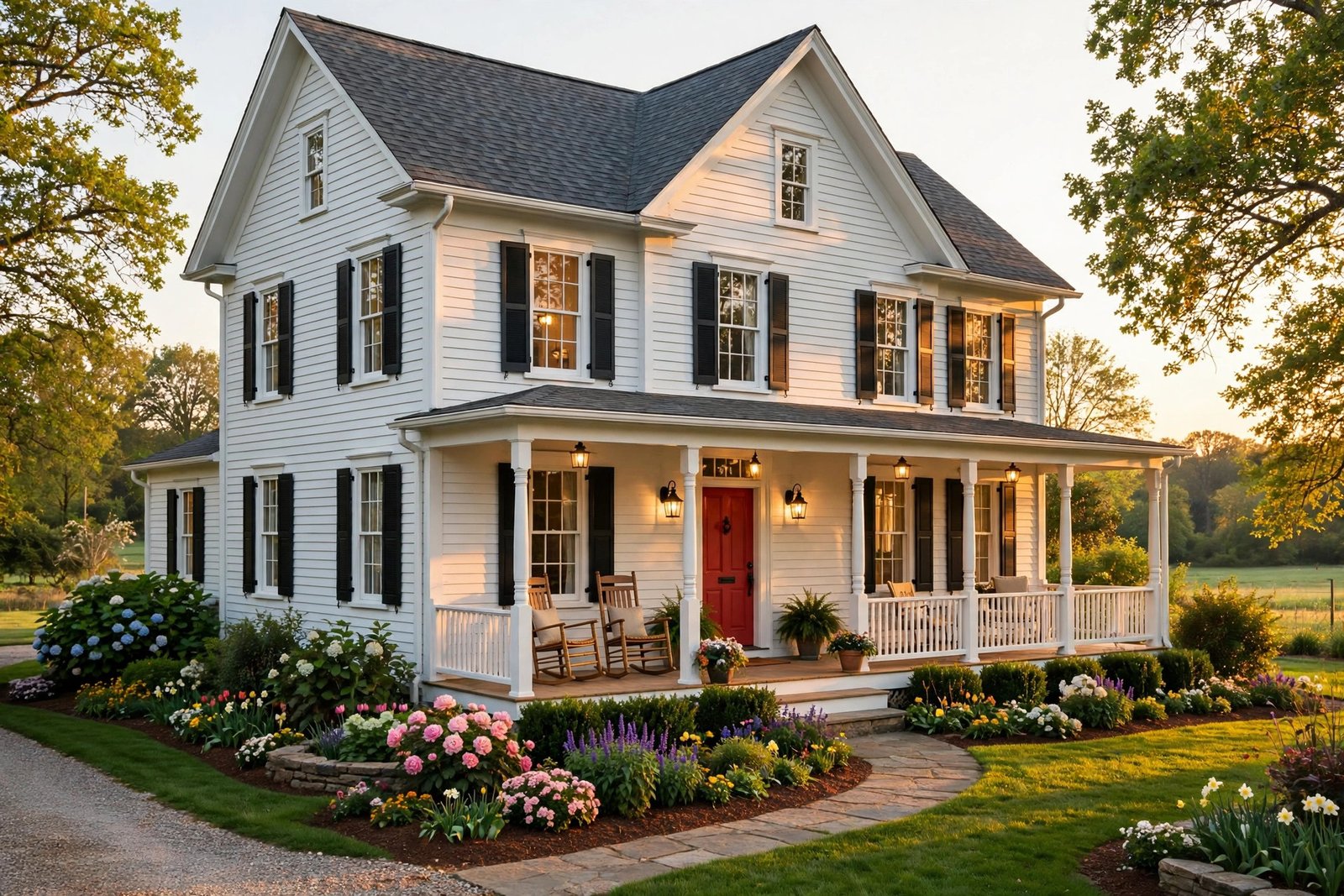
Before-and-after transformations are the most satisfying part of farmhouse renovation, and the best way to plan your own project. The most dramatic transformations usually share a pattern: the before photo shows a house hidden behind overgrowth, with peeling paint, a sagging porch and a roof that has seen better days. The after photo shows the same house with a clear yard, fresh paint, a repaired porch, new landscaping and a lit front door. The house itself has not changed — it has been revealed.
Plan your own before-and-after in stages: clean and clear, then repair the porch, roof and gutters, then paint, then landscaping and lighting. Each stage is a visible improvement. Photograph every stage from the same spot and keep a record of costs — a $15,000–$30,000 renovation done in stages is far more manageable than the same work done all at once.
Is Renovating a Farmhouse Exterior Worth It?
A farmhouse exterior renovation is worth it when it protects the house and makes it more livable — not when it turns the house into something it never was. A new roof, repaired siding, a solid porch and good drainage protect the structure for decades, and those are investments, not luxuries. A fresh paint job, landscaping and lighting make the house more enjoyable every day, and they raise its value too: exterior paint and landscaping return 70–100% of their cost at sale.
It is not worth it when the renovation erases what made the house special. Replacing original wood windows with vinyl or covering clapboard with synthetic siding usually costs more than it returns — in money and in character. The best farmhouse exterior renovations are the ones where a visitor cannot tell what is new and what is original.
Final Thoughts
An old farmhouse exterior is a long project, not a weekend project, and that is part of its charm. Start with the structure — roof, drainage, porch — then move to paint, then to details and landscaping. Choose colours that suit the house and the landscape, keep the original proportions, repair before you replace, and let the garden grow in over time. The best old farmhouse exterior ideas are the ones that respect the house.
If you are planning the full renovation, read our guide on how much it costs to renovate an old house to budget the whole project first.
Frequently Asked Questions
What is the best exterior paint colour for an old farmhouse?
Warm white or cream is the safest and most classic choice, with black, deep green or navy as trim and door colours. Bold colours like charcoal or forest green also work well, especially in northern climates, but test large swatches on the house before committing.
How much does it cost to repaint an old farmhouse exterior?
A professional exterior paint job on a typical two-storey farmhouse costs $5,000–$15,000, depending on size, condition and preparation. Painting it yourself costs $1,500–$3,000 in materials, but preparation — scraping, sanding and priming old wood — takes most of the time.
Should I replace the original windows on my farmhouse?
Usually not. Original wood windows can be repaired and, with storm windows and weatherstripping, perform nearly as well as replacements. Restoration costs $800–$1,500 per window and the restored window will outlast a vinyl replacement by decades.
How can I improve my farmhouse curb appeal on a budget?
Clean everything first, then paint the front door, replace the house numbers, add potted plants, mulch the beds and trim overgrown shrubs. For under $500, those steps alone transform the first impression of the house.
Do I need permission to change the exterior of a historic farmhouse?
It depends on where you live. Farmhouses in historic districts or on historic registers often need approval for exterior changes, including paint colour. Check with your local historic preservation office before starting work.
