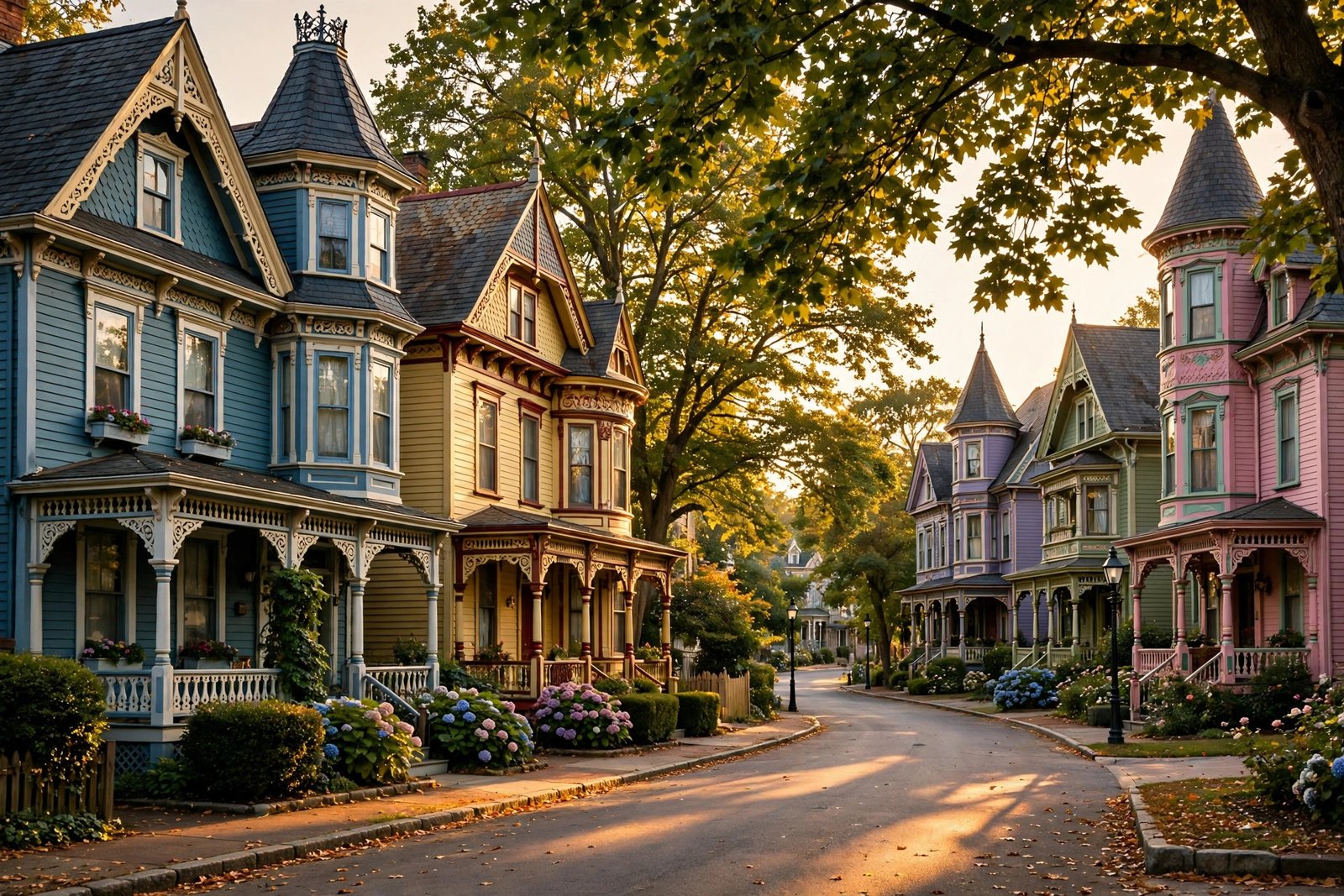
Few sights in American architecture stop people in their tracks quite like an old Victorian house. With steep gabled roofs, towers and turrets, gingerbread trim, and wraparound porches, these houses were built in an age when a home was meant to show off. Between roughly 1840 and 1900, the Victorian era produced some of the most decorated houses ever built in the United States, and many of the finest still stand today, lovingly restored.
This guide rounds up 15 of the most beautiful old Victorian houses in America, from the famous Painted Ladies of San Francisco to the storm-surviving Bishop’s Palace in Galveston. Each one is a real, visitable historic house — Queen Anne, Italianate, Stick, Gothic Revival and more — with its own story and lessons for anyone dreaming of owning or restoring one. If you are thinking about taking on a Victorian, read our guide to the cost to renovate an old house first.
What Makes a Victorian House So Beautiful?
Victorian houses are beautiful because they break every rule of plain, practical building. Spindlework friezes, turned porch posts, carved bargeboards, stained-glass windows, patterned shingles, and bold multi-colour paint schemes all work together to make the house feel like a piece of art rather than a box to live in.
The style also comes in many flavours. Queen Anne houses are the most recognisable, with asymmetrical shapes, towers, and wraparound porches. Italianate houses are more formal, with tall narrow windows, bracketed eaves, and low-pitched roofs. Stick style houses show off their wooden framing as decoration. Gothic Revival Victorians point skyward with steep gables and pointed windows. Once you learn to spot these details, every old neighbourhood becomes a museum you can walk through for free.
These houses are also old, and old houses need constant care — peeling paint, soft wood, tired roofs, and outdated wiring. That is why each house below includes a short renovation note.
The 15 Most Beautiful Old Victorian Houses in America
Here they are, from the Pacific Coast to the Atlantic, in no particular order — because picking a single favourite would be impossible.
1. The Painted Ladies — San Francisco, California
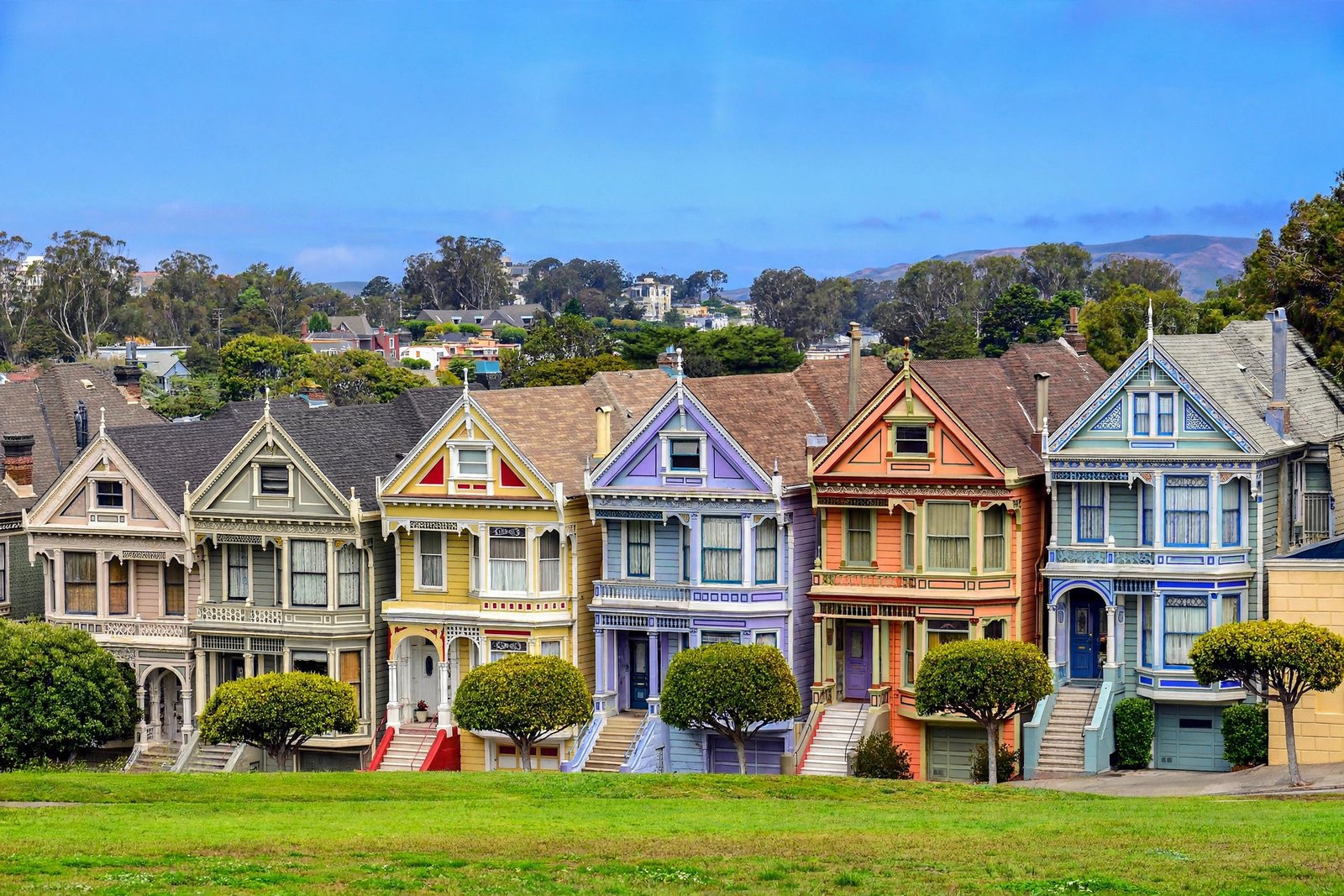
The row of Queen Anne houses at 710–720 Steiner Street, facing Alamo Square in San Francisco, is the most photographed group of old Victorian houses in America. Built between 1892 and 1896, these six houses are famous for their bright, multi-colour paint schemes — the “painted lady” look that turned a whole neighbourhood into a postcard. Together with the downtown skyline behind them, they are the classic San Francisco view.
The houses survived the 1906 earthquake and decades of neglect before a wave of restorations in the 1960s and 1970s brought back their colours. The lesson for owners is simple: a good paint job is the cheapest facelift an old house can get. Stripping, repairing, and repainting in a historically correct palette can transform a tired Victorian in a single summer, and it protects the wood underneath for another decade.
2. Carson Mansion — Eureka, California
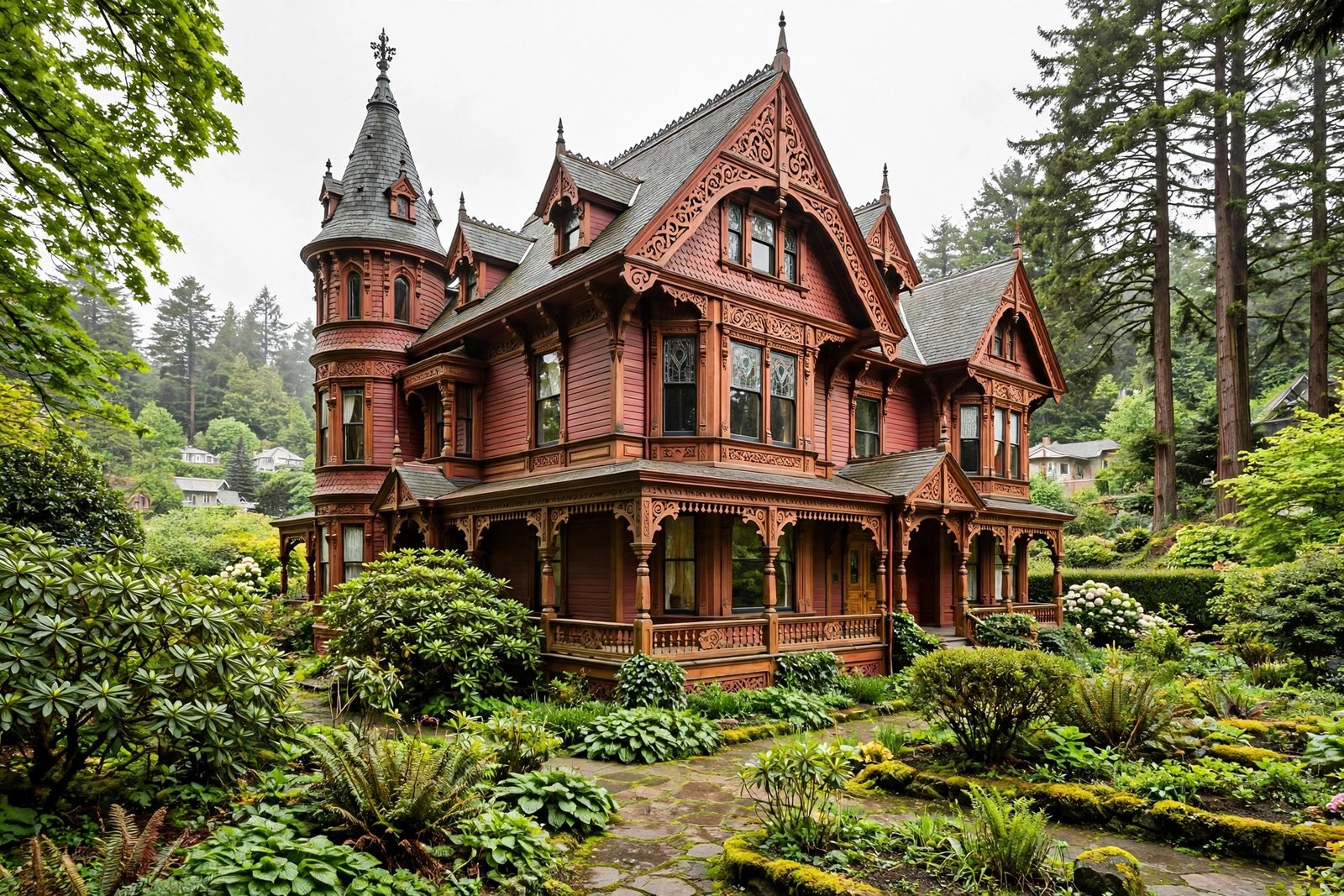
The Carson Mansion in Eureka, California, is often called the grandest Victorian house in America — and it is easy to see why. Built from 1884 to 1886 for lumber baron William Carson, this Queen Anne mansion is a riot of towers, turrets, gables, and carved wood, built almost entirely from redwood and other local timber. Its lesson: in damp coastal air, painted wood needs constant attention.
The mansion is now a private club, so visitors admire it from the street, but its exterior alone is worth the trip. The renovation note here is about wood: in a damp coastal climate like Eureka’s, painted wood needs constant attention. The Carson Mansion survives because its owners never let maintenance slide — a reminder that the most expensive part of owning a Victorian is rarely the purchase price, but the steady, patient upkeep that keeps the details sharp.
3. Winchester Mystery House — San Jose, California
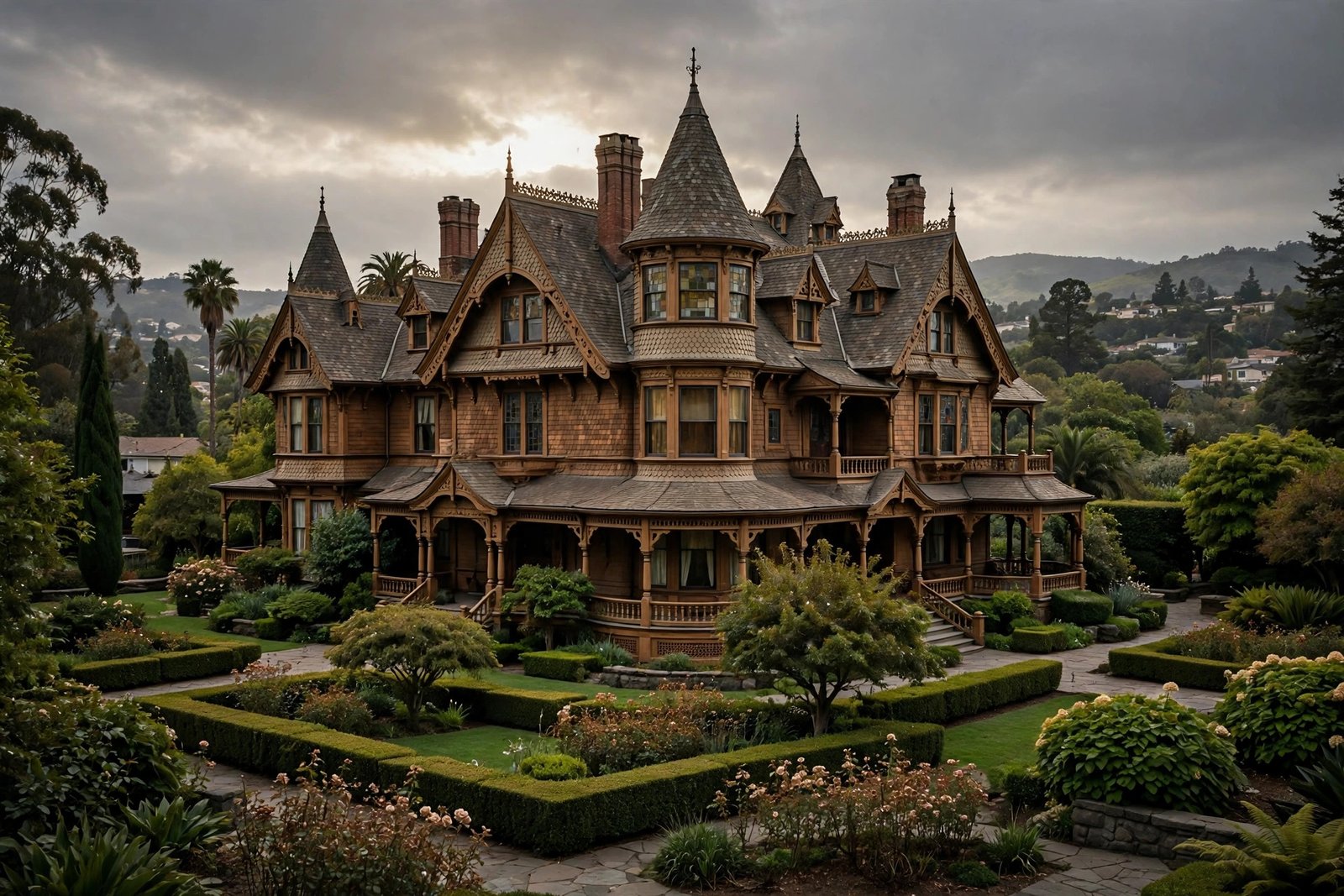
The Winchester Mystery House in San Jose, California, is the strangest Victorian in America. Sarah Winchester, heir to the Winchester rifle fortune, built and rebuilt this Queen Anne mansion almost continuously from 1886 until her death in 1922. The result is a sprawling, 160-room house full of staircases that lead nowhere, doors that open onto walls, and windows set into floors — all the product of one woman’s eccentric, ever-changing vision. Its lesson: a good restoration needs a plan, a budget, and a stopping point.
4. Bishop’s Palace — Galveston, Texas
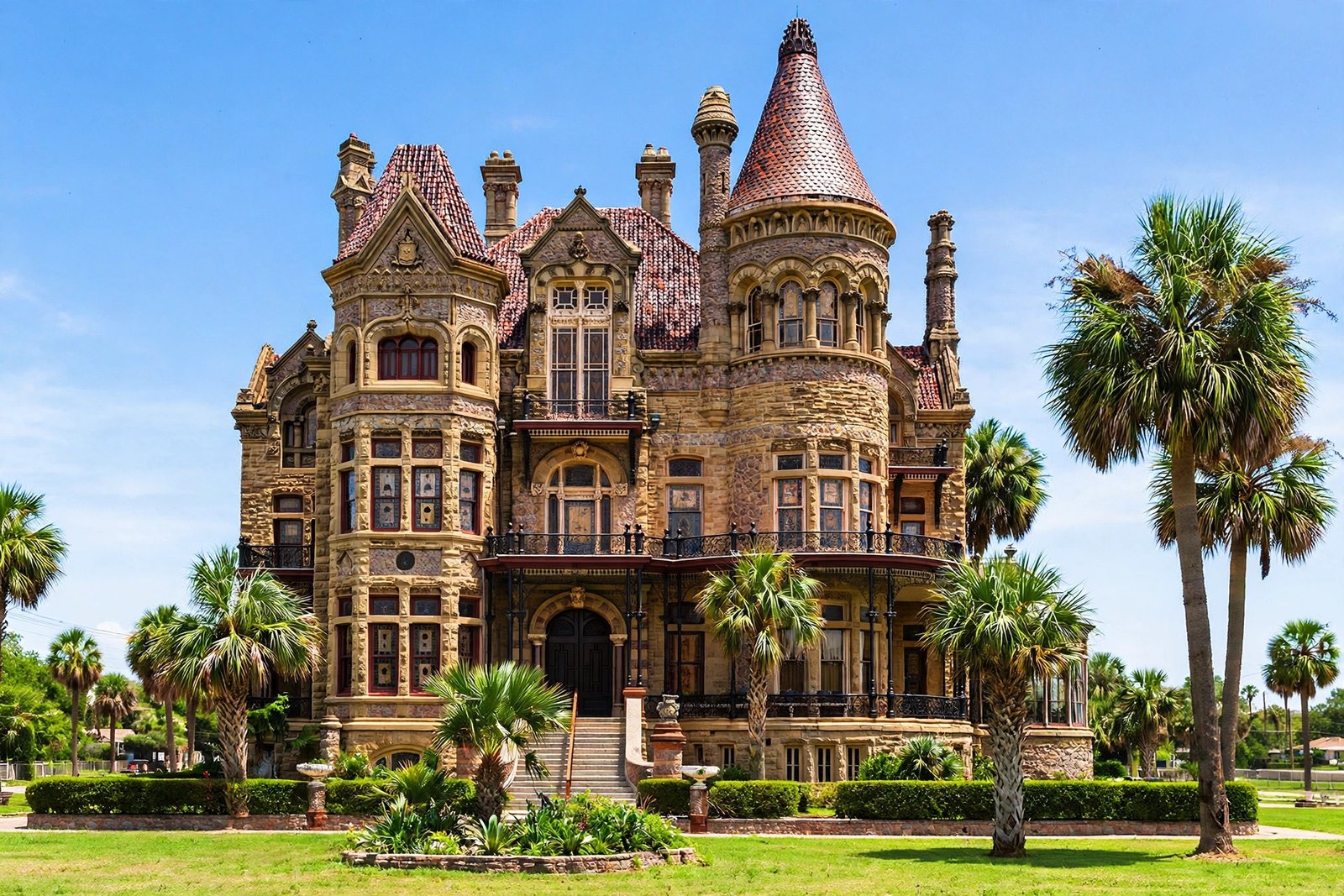
Bishop’s Palace in Galveston, Texas, is a Victorian built like a fortress — and it needed to be. Completed in 1892 for lawyer and politician Walter Gresham, this grand house is built of granite, sandstone, and marble, with carved stone fireplaces, bronze dragons, and stained glass throughout. When the devastating hurricane of 1900 hit Galveston, Bishop’s Palace stood firm while much of the city around it was destroyed, and it later served as the residence of the Bishop of Galveston. Its lesson: spend the most where the weather hits hardest — roof, foundation, and walls.
5. Emlen Physick Estate — Cape May, New Jersey
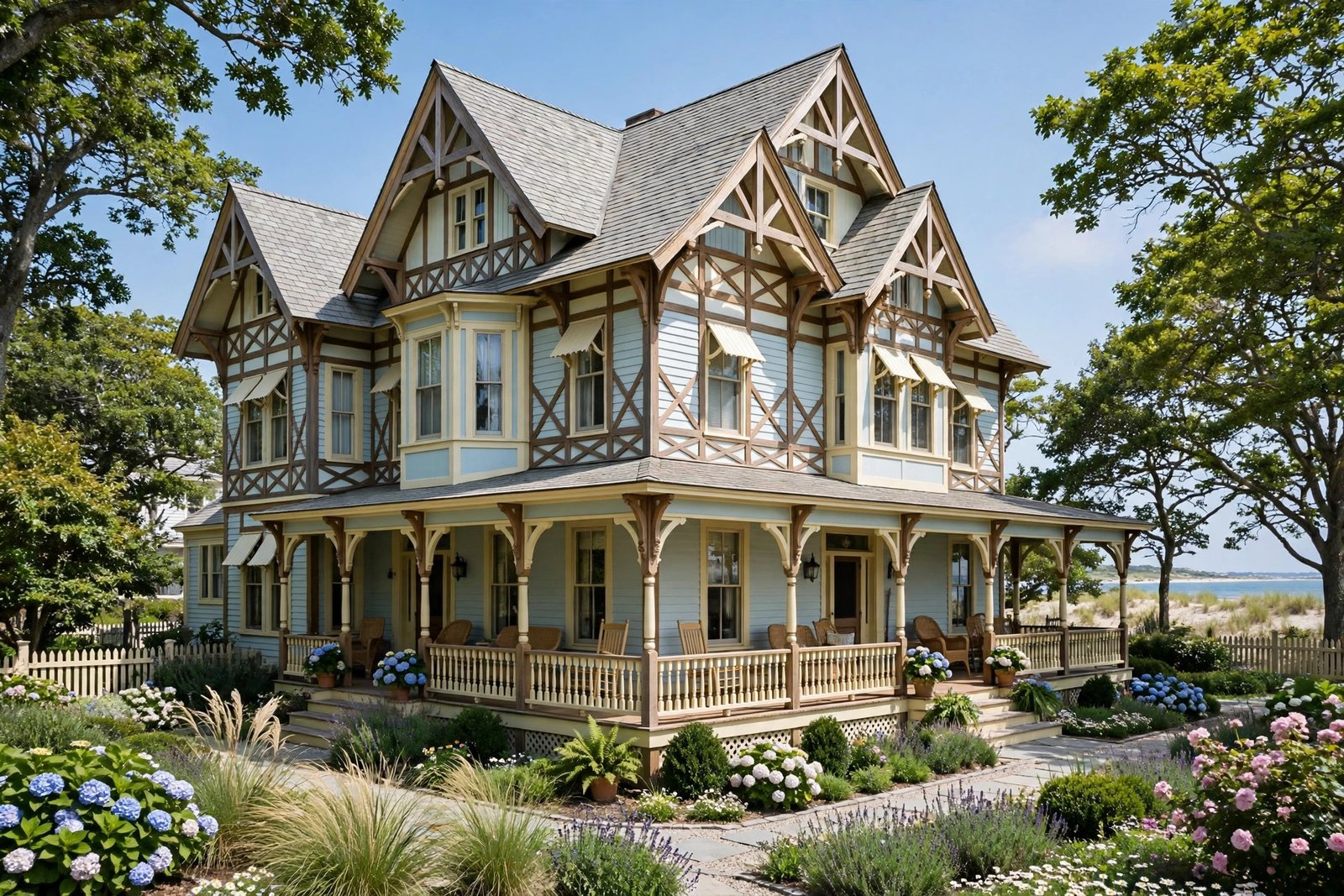
Cape May, New Jersey, is one of the best-preserved Victorian seaside towns in America, and the Emlen Physick Estate is its crown jewel. Built in 1879 and designed by the famous architect Frank Furness, this 18-room Stick style mansion shows off its wooden framing as decoration, with gables, brackets, and a wide porch that was made for summer evenings. The estate is now a museum, and it anchors a whole historic district of painted Victorians.
Cape May’s Victorians are famous for soft, seaside palettes — creams, pale blues, and dusty pinks — and the Physick Estate shows how a restrained palette can be just as beautiful as a bold one. If you are repainting a Victorian, look at what the neighbours and the landscape suggest; a house that fits its street will always look better than one that shouts over it.
6. Rosson House — Phoenix, Arizona
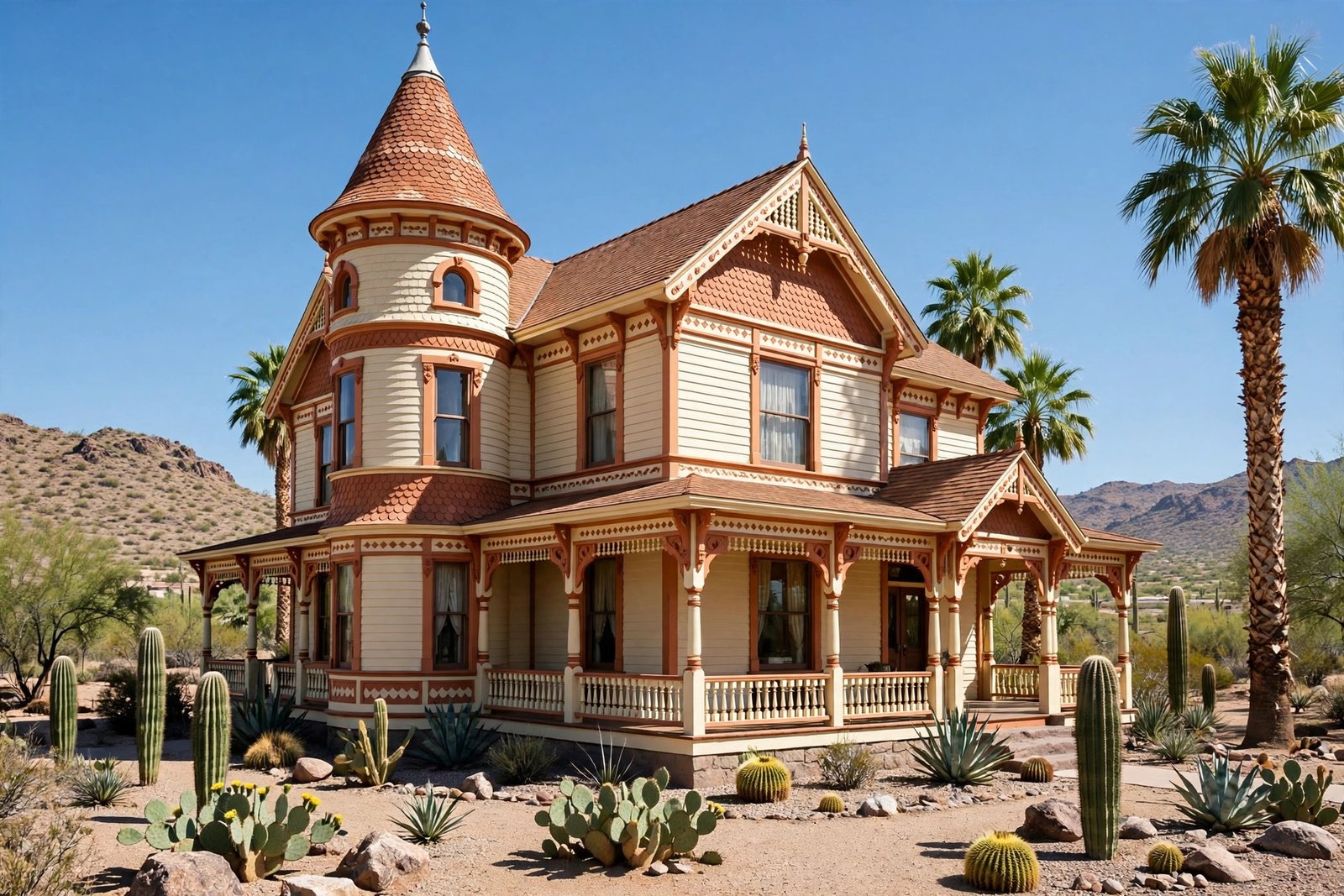
The Rosson House in Phoenix, Arizona, proves that Victorian beauty is not just an East Coast or California story. Built in 1895 for Dr. Roland Rosson, this Queen Anne house is a rare survivor in the desert, with a wraparound porch, a corner tower, and intricate woodwork that looks almost out of place under the Arizona sun — and that is exactly what makes it so striking. Its lesson: in hot sun, budget for exterior maintenance more often than the books suggest.
7. Molly Brown House — Denver, Colorado
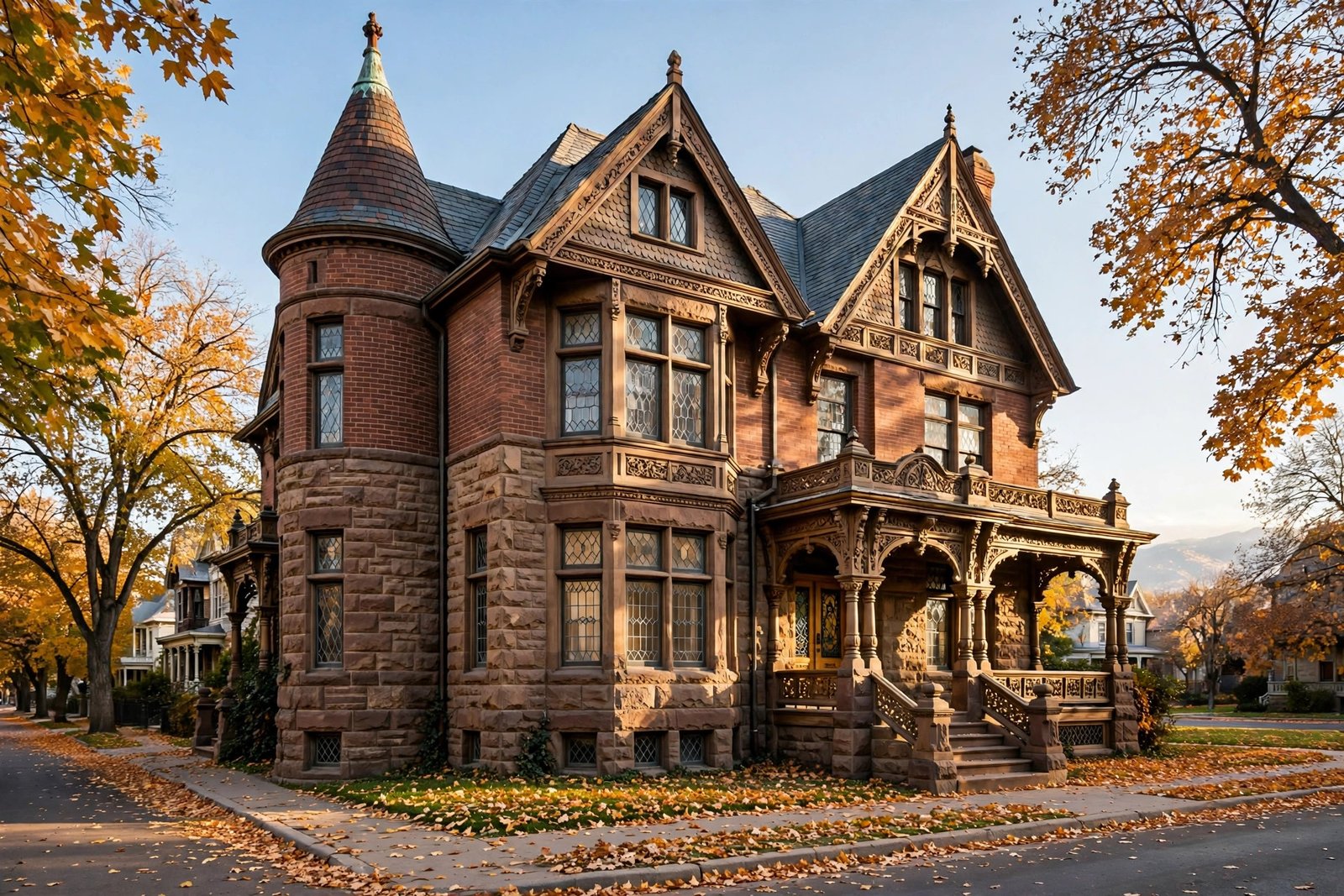
The Molly Brown House in Denver, Colorado, is a Queen Anne mansion built in 1889 and made famous by its most famous owner, Margaret “Molly” Brown, who survived the sinking of the Titanic in 1912. The house is a classic Victorian showpiece: a stone and brick exterior, a corner tower, leaded-glass windows, and richly decorated interiors filled with period furniture and art. Its lesson: a house’s story adds value, so keep the original details.
8. Glover Mansion — Spokane, Washington
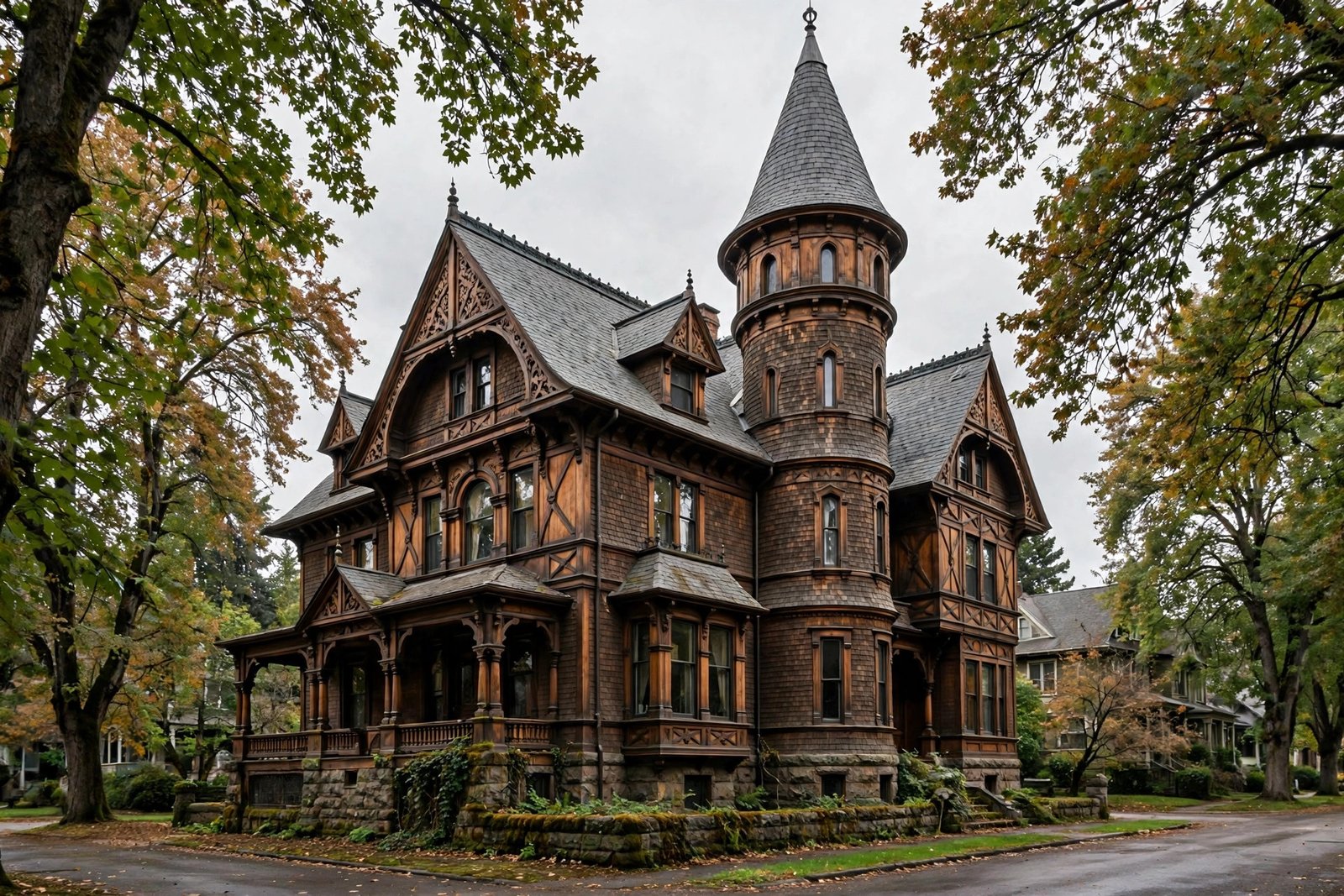
The Glover Mansion in Spokane, Washington, was built in 1888 for James N. Glover, one of the founders of the city. This grand Victorian is known for its bold, almost castle-like presence, with a tower, steep gables, and rich wood interiors, and it sits in one of Spokane’s most historic neighbourhoods. Its lesson: a big Victorian survives when its rooms still work for modern life.
9. Flavel House — Astoria, Oregon
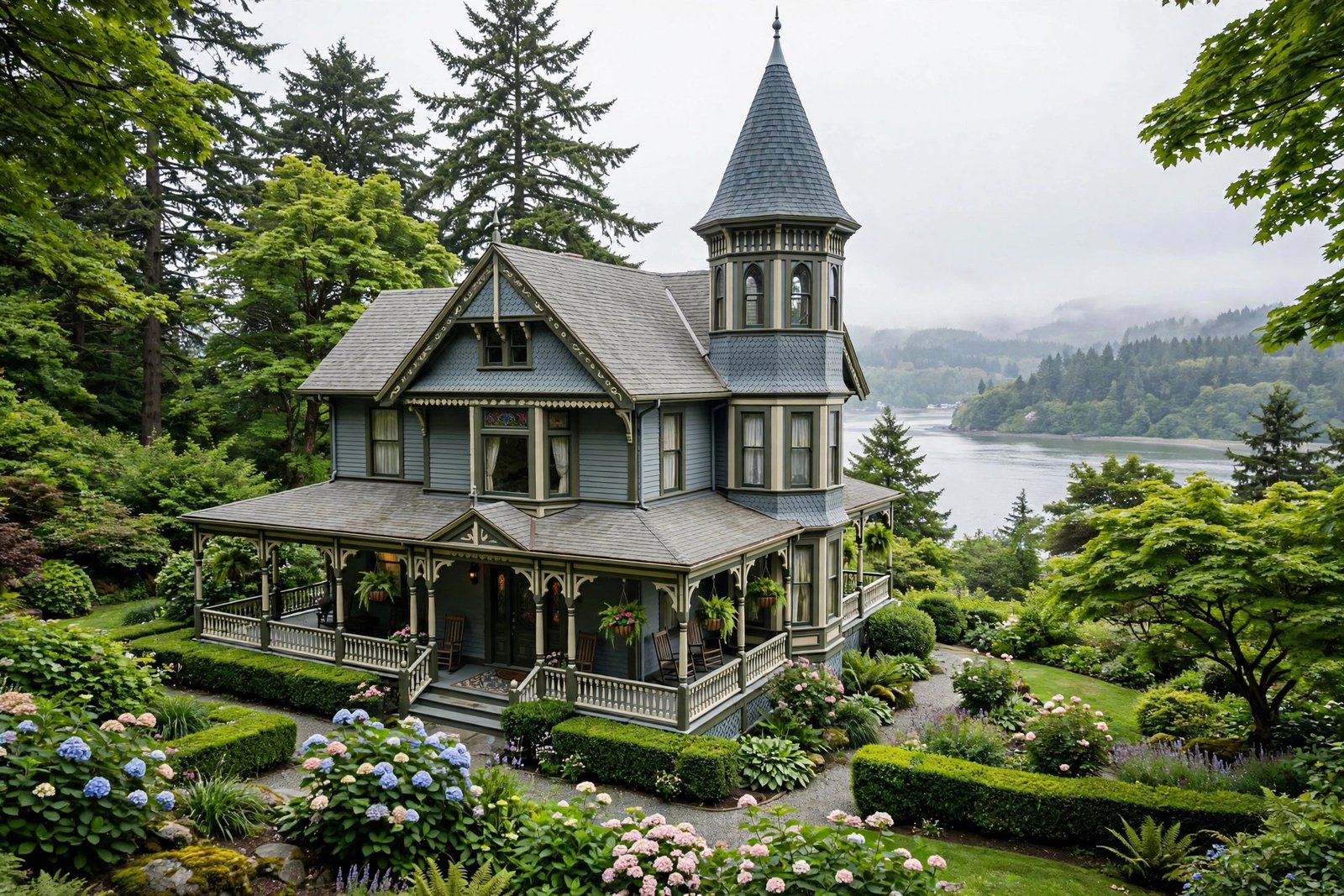
The Flavel House in Astoria, Oregon, was built in 1885 for Captain George Flavel, a Columbia River bar pilot who became one of the wealthiest men in the Pacific Northwest. The house is a classic Queen Anne, with a wraparound porch, a tower, and beautifully kept gardens, and it looks out over the river that made its owner’s fortune.
10. Mercer-Williams House — Savannah, Georgia
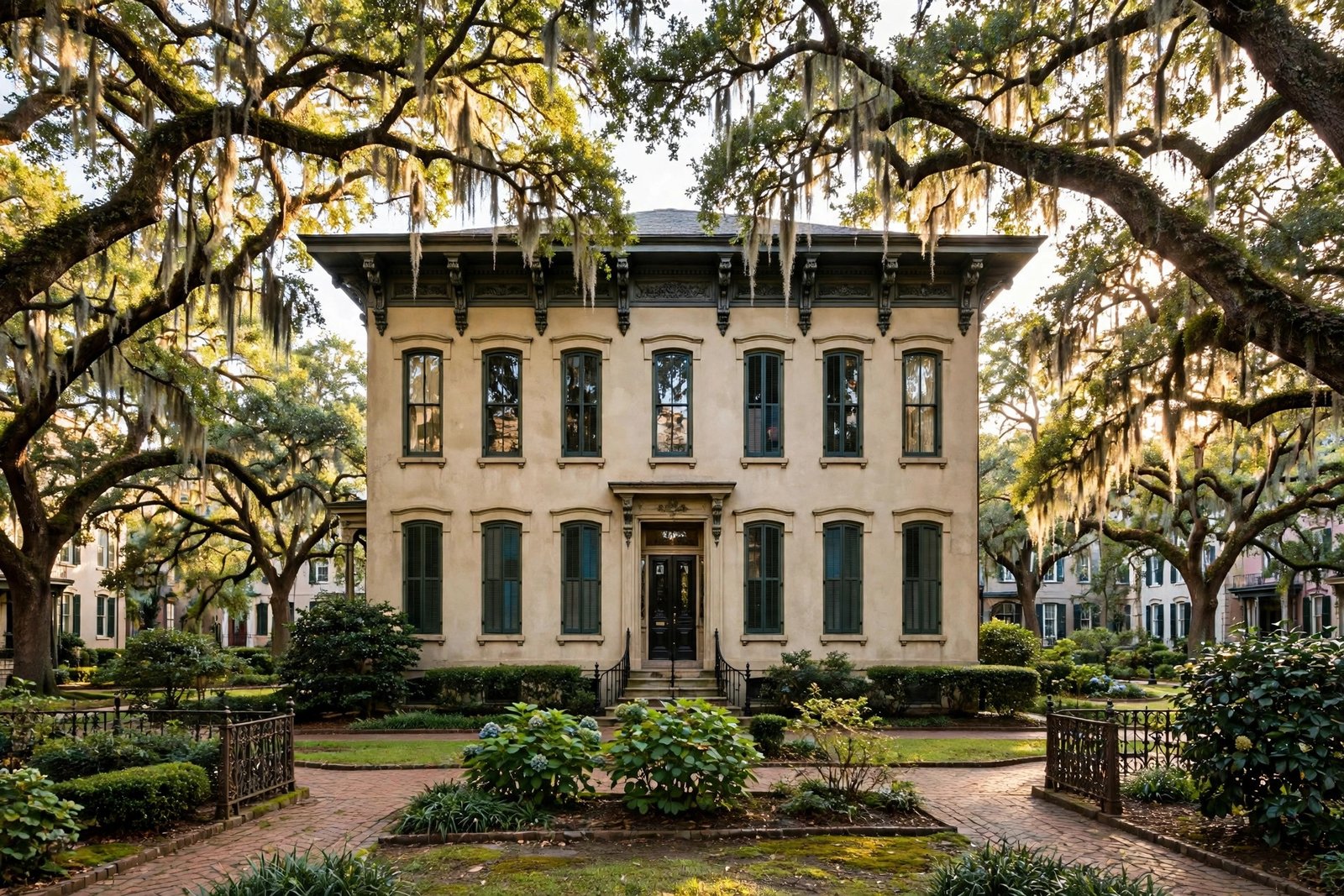
The Mercer-Williams House in Savannah, Georgia, is one of the most elegant Victorian-era houses in the South. Built between 1860 and 1868 in the Italianate style, it has tall, narrow windows, a bracketed cornice, and a formal, symmetrical front that stands out among Savannah’s more famous squares. It later became famous as the setting of the book and film “Midnight in the Garden of Good and Evil.”
11. Lemp Mansion — St. Louis, Missouri
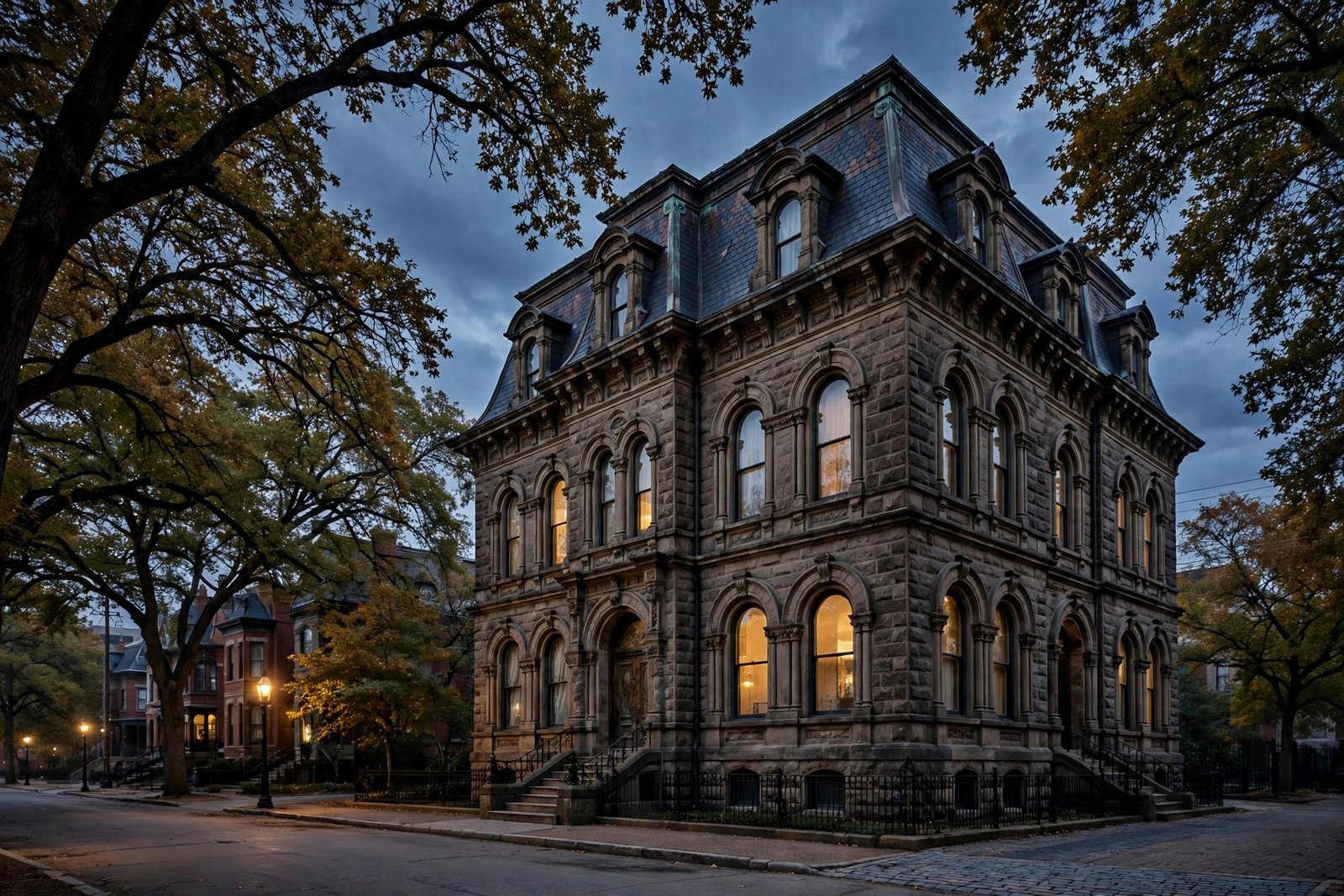
The Lemp Mansion in St. Louis, Missouri, is an Italianate Victorian built in 1868 for the Lemp family, who built one of America’s great brewing empires. The house is grand and slightly forbidding, with a mansard roof, arched windows, and heavy masonry, and it has a dramatic history — the Lemp family fortune rose and fell with Prohibition, and the house is now famous as much for its ghost stories as for its architecture.
12. Pabst Mansion — Milwaukee, Wisconsin
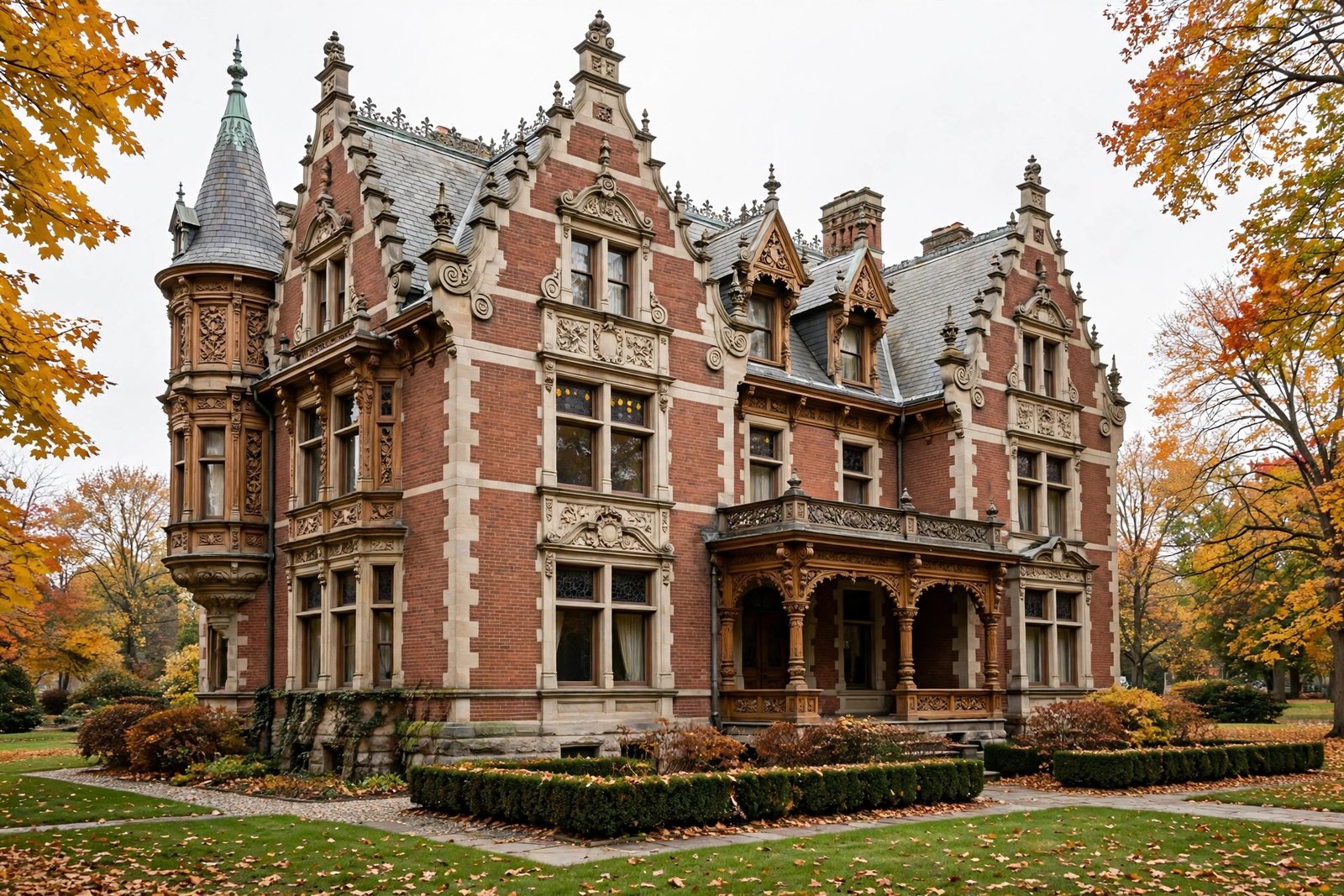
The Pabst Mansion in Milwaukee, Wisconsin, was built from 1890 to 1892 for Captain Frederick Pabst, founder of the Pabst Brewing Company. The house is a Flemish Renaissance Revival showpiece, with a steep roof, ornate gables, and interiors covered in hand-carved wood, gilded plaster, and stained glass. It is one of the most richly decorated Victorian-era houses in the Midwest.
13. Phelps Mansion — Binghamton, New York
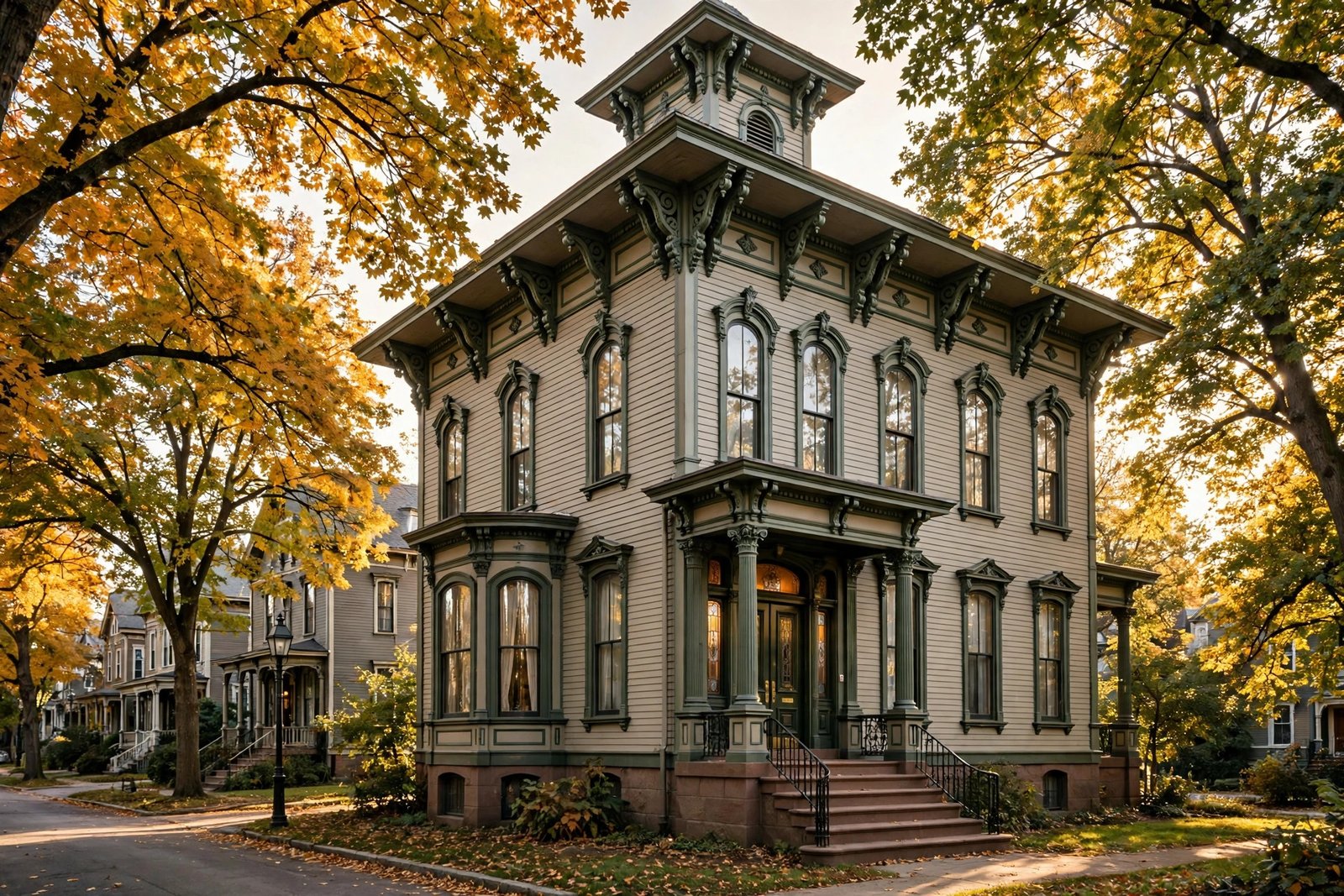
The Phelps Mansion in Binghamton, New York, was built in 1870–1871 for Sherman Phelps, a banker and former mayor, and it is one of the finest Italianate houses in the Northeast. The house is known for its extraordinary interiors: hand-painted ceilings, carved walnut woodwork, and a grand staircase, all preserved almost exactly as they were in the 1870s.
14. Mark Twain House — Hartford, Connecticut
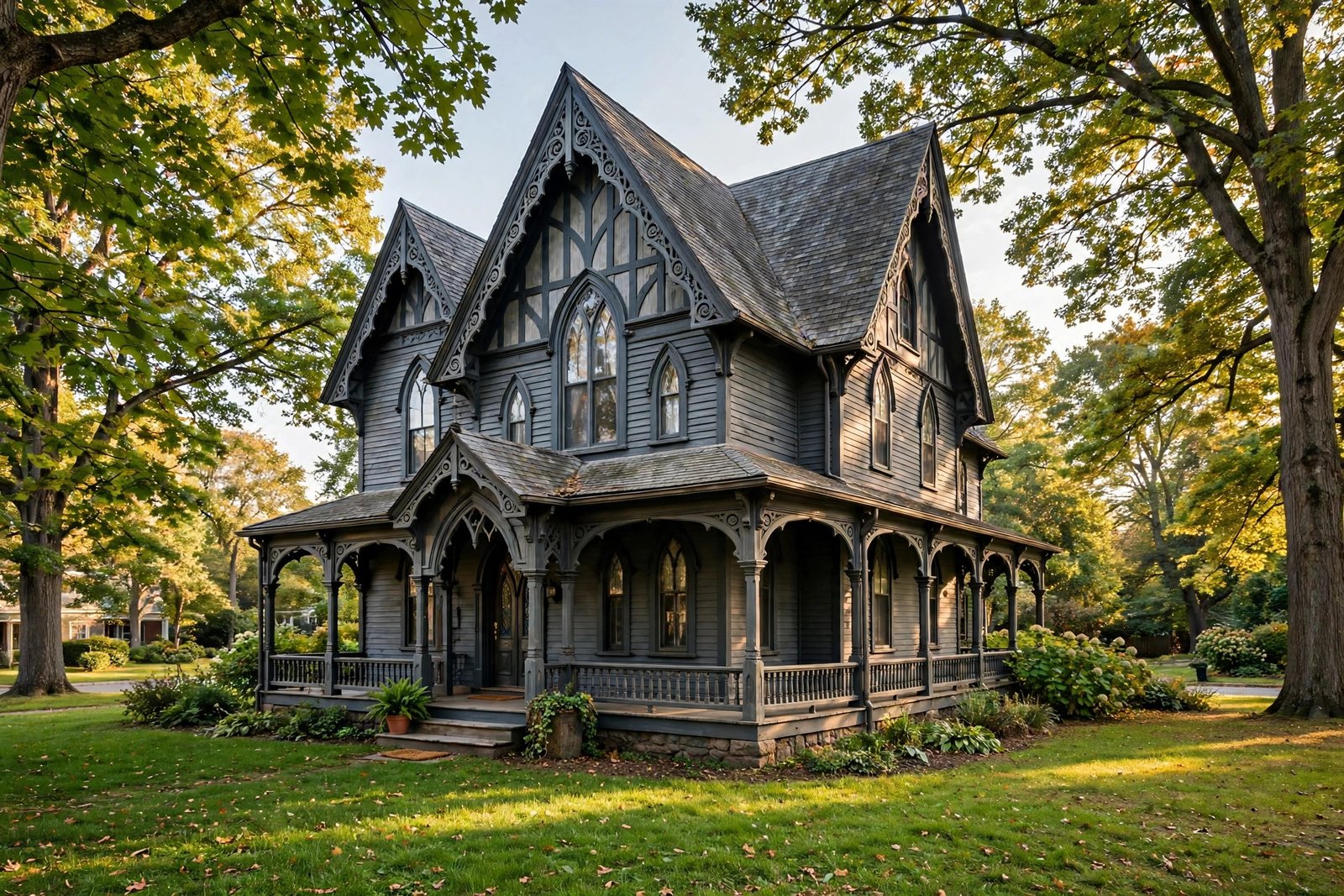
The Mark Twain House in Hartford, Connecticut, was built in 1874 for Samuel Clemens — Mark Twain — and it is one of the most literary houses in America. Designed in the Gothic Revival style with a dash of Stick decoration, the house has steep gables, a wraparound porch, and a famous billiard room where Twain wrote some of his greatest books.
15. James J. Hill House — St. Paul, Minnesota
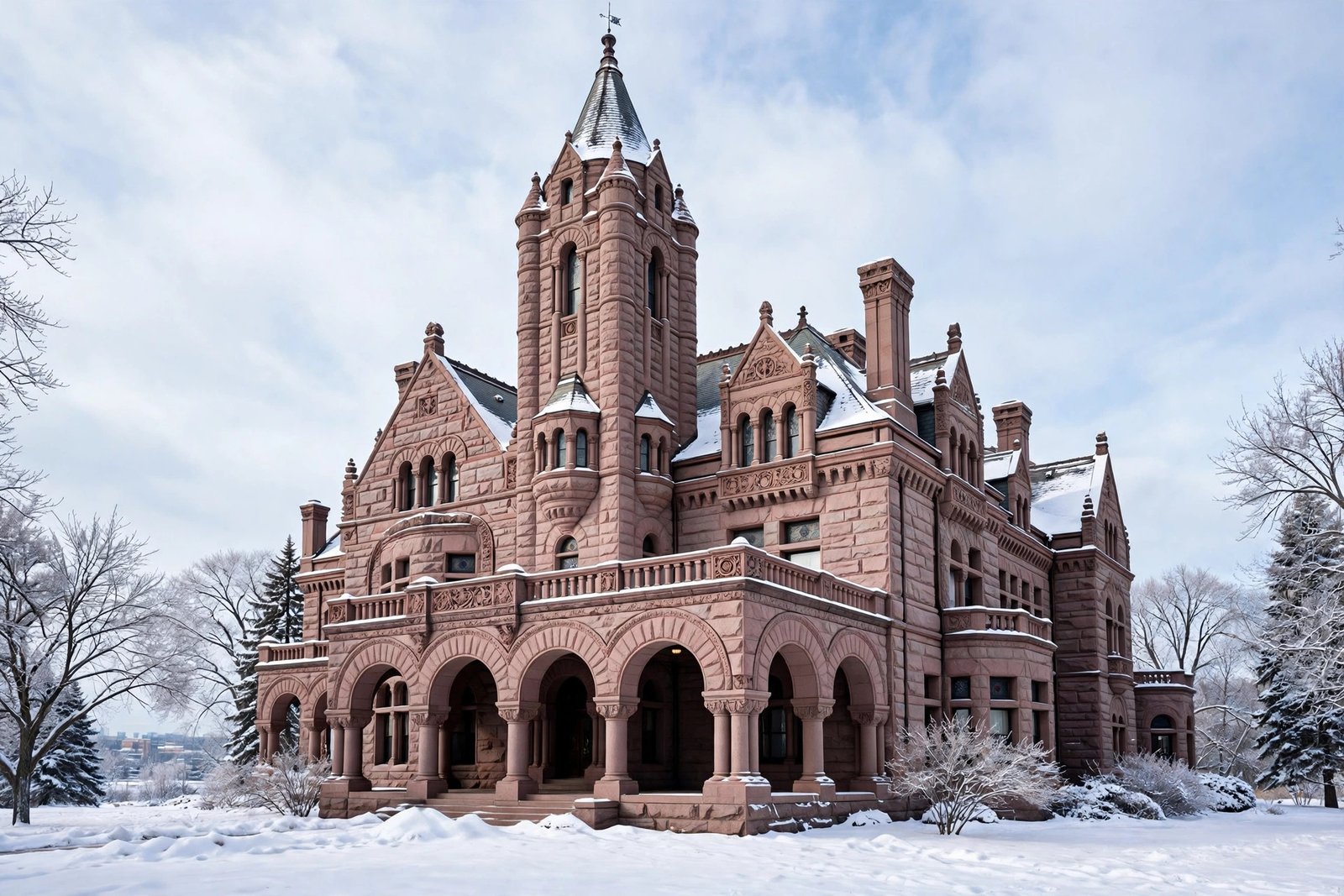
The James J. Hill House in St. Paul, Minnesota, was built in 1891 for the railroad magnate James J. Hill, and it is one of the largest and most impressive Victorian-era houses in the Midwest. Designed in the Richardsonian Romanesque style, it is built of pink granite, with massive arches, a 30-foot-tall great hall, and interiors filled with carved wood, stained glass, and art. It was one of the first houses in the country with electric lighting throughout.
How Much Does It Cost to Renovate a Victorian House?
Falling in love with one of these houses is easy; paying to restore one takes planning. A light cosmetic renovation of a Victorian — paint, floors, and fixtures — can run from $30,000 to $75,000. A mid-range renovation with a new kitchen and bathroom, roof work, and updated wiring usually costs $100,000 to $250,000. A full, historically accurate restoration of a large Victorian can pass $500,000, especially in expensive cities or when original details must be rebuilt by hand.
The biggest cost drivers are the very things that make Victorians beautiful: decorative woodwork, stained glass, and plaster details are expensive to repair, so a 15–20% contingency budget is essential. Insurance is another cost owners forget. Many insurers charge more for Victorian houses, and some require an updated roof, wiring, or plumbing before they will write a policy. Get insurance quotes before you buy, not after, and ask the seller for the age of the roof, the electrical panel, and the heating system. Those three dates tell you more about your first five years of costs than almost anything else in the inspection report. Our full guide to the cost to renovate an old house breaks down every project, from kitchens to roofs, with realistic 2026 prices.
If you are planning an exterior project, our ideas for old farmhouse exterior ideas will help too — many of the same paint, porch, and curb-appeal principles apply to Victorians, farmhouses, and Colonials alike.
Tips for Visiting and Photographing Victorian Houses
Many of these houses are museums with regular tours; a few are private homes you can only admire from the street. Check opening hours before you visit, and note interiors are often photography-free.
Visit in the late afternoon, when warm light brings out the colours and the shadows of the trim. A wide-angle lens captures a whole facade, while a longer lens picks out the details — the spindlework, the stained glass, the carved brackets. If you own a Victorian, photograph it in every season; those photos are a record for future restorers and wonderful Pinterest pins.
Frequently Asked Questions
What is the most famous Victorian house in America?
The Painted Ladies in San Francisco are the most famous old Victorian houses in America. The row of Queen Anne houses at 710–720 Steiner Street, built in the 1890s, is the classic image of Victorian San Francisco and one of the most photographed streets in the country.
What is the difference between Queen Anne and Italianate Victorian houses?
Queen Anne houses are asymmetrical, with towers, turrets, wraparound porches, and lots of decorative woodwork. Italianate houses are more formal and symmetrical, with tall narrow windows, bracketed eaves, and low-pitched roofs. Both are Victorian styles, but Queen Anne is playful and Italianate is grand.
Are old Victorian houses expensive to maintain?
Yes, they cost more to maintain than a modern house. Paint, wood repair, roofing, and old systems like wiring and plumbing all need regular attention. Owners should budget roughly 1–2% of the home’s value per year for maintenance, and more in the first years after purchase while deferred repairs are caught up.
Can you renovate a Victorian house and keep its historic character?
Yes, and that is the best approach. Keep original woodwork, windows, and fireplaces wherever possible, repair rather than replace, and use historically appropriate materials and colours. Modern kitchens and bathrooms can be fitted in without destroying the historic rooms, and a faithful restoration usually holds its value better than a modernised one.
Which Victorian house should I visit first?
If you can only visit one, start with the Painted Ladies in San Francisco for the iconic view, or the Mark Twain House in Hartford for the interiors and the literary history. Both are easy to reach, well preserved, and give a perfect first taste of what makes old Victorian houses in America so special.
Final Thoughts
These 15 old Victorian houses prove that great architecture does not go out of fashion. From the painted ladies of San Francisco to the granite halls of St. Paul, they have survived earthquakes, hurricanes, recessions, and changing tastes — and they are still beautiful and still teaching us how to build with character.
If one of them inspires you to buy or restore a Victorian of your own, take your time. Research the house, budget honestly, and save the details that make it special. Start with a visit, take notes, and talk to the people who care for these houses — their advice is worth more than any book. A Victorian house is not just a home; it is a piece of American history, and the best owners are the ones who become its next chapter.
